Friday, September 4, 2020

Emine Fidan Elcioglu's "Divided by the Wall"

Emine Fidan Elcioglu is Assistant Professor of Sociology at the University of Toronto.

She applied the “Page 99 Test” to her new book, Divided by the Wall: Progressive and Conservative Immigration Politics at the U.S.-Mexico Border, and reported the following:
Divided by the Wall tells the story of why ordinary Americans join volunteer organizations and mobilize in the U.S.-Mexico borderlands, either in the pursuit of helping undocumented immigrants or to aid immigration enforcement. Though the terms are not very nuanced, I refer to the former group as ‘pro-immigrant’ activists, and the latter as ‘immigration restrictionists’. What makes my research unique is that I study “conscience constituents”, a fancy sociology term to refer to social movement participants who do not stand to gain personally from the movement’s successes. In this case, these are folks who, because of the privileges of whiteness and U.S. citizenship, are not directly impacted by immigration policy, but who nonetheless work to change it. The big question I ask is: why?

Now, let’s skip over to page 99. Page 99 introduces the book’s second part, which examines how these two politically opposed groups wrestled with the accusations of their opponents—and how they tried to refute these allegations. I write, “When challenging the actions of their left-wing opponents, restrictionists activists like Rick repeatedly raised the topic of organized crime and drug smuggling. […] [Meanwhile] Pro-immigrant activists, like Mariela, argued that restrictionists were motivated, above all, by their hatred of people of color, particularly people of Latin American descent.” As much as I would have loved the page 99 test to work, it alone wouldn’t give an interested reader a very clear sense of what the whole book is about.

But the page is still intriguing! It clues in the reader to the fact that the book is an ethnographic study, involving hours upon hours of me talking to people like Mariela and Rick to figure out who they were, how they made sense of the world, and why they did what they did. Page 99 also highlights another unique feature of the book: that I studied both sides of this political struggle. Social scientists tend to shy away from this kind of holistic research design. After all, it is far easier to study one side of a contentious debate, especially the side with which we personally sympathize. But Rick was keenly aware of what people like Mariela thought about him, just as Mariela knew what people like Rick thought about her. This fact—that activists are quite mindful of their political adversaries when they mobilize— suggests that we would miss important data were we to confine the study to just Rick or just Mariela. As a wise mentor once told me (echoing the famous sociologist, Pierre Bourdieu): How can you follow a game of soccer by fixating on one side? You have to watch both teams play.

So what did I learn as I watched this soccer game? Well, a lot. Most importantly, I learned that when people hold strong convictions about ‘the wall’, they’re not just articulating concerns about ‘the wall’. As I write on page 233: “the polarization of immigration politics is a symptom of worsening inequality and the expression of local communities’ desire to do something about that inequality.” So, when we debate immigration policy, let’s not just talk about walls. Let’s also talk about the underlying issue: how to eradicate the insecurity and inequality that makes immigration a needlessly contentious topic.
Visit Emine Fidan Elcioglu's website.

--Marshal Zeringue

Thursday, September 3, 2020

Ned Dobos's "Ethics, Security, and The War-Machine"

Ned Dobos is Senior Lecturer in International and Political Studies at The University of New South Wales at the Australian Defence Force Academy. He is the author of Insurrection and Intervention: The Two Faces of Sovereignty (2012) and co-editor of Challenges for Humanitarian Intervention: Ethical Demand and Political Reality (2018).

Dobos applied the “Page 99 Test” to his new book, Ethics, Security, and The War-Machine: The True Cost of the Military, and reported the following:
Whether or not going to war is morally justified depends, in part, on whether the expected benefits of the war would outweigh its foreseen costs. Is the death and destruction “worth it”? This is the principle of proportionality. Page 99 makes the observation that, due to a well-documented psychological bias known as “hostile attribution error”, government officials will usually fail to accord sufficient weight to enemy combatant and civilian lives in their proportionality calculations.

The moral of the story is supposed to be this: Political decision-makers, even if they are sincerely committed to never waging “unjust wars”, will probably still wage them sometimes, on account of the unconscious biases that warp human judgment. Therefore, the military is an instrument that is very likely to be misused by the state. Since this point does not come across clearly on page 99, the test does not amount to a particularly good browser’s shortcut on this occasion. To be sure, the test does give the reader a sample of the kinds of evidence and argumentation to be found in the book, but it does not provide the reader with a clear sense of the conclusions that the book reaches.

Militaries certainly benefit their parent societies in various ways, but they are also incredibly costly institutions—financially, environmentally, morally, and culturally—not to mention dangerous. Because of this, some countries (most notably Costa Rica) have decided to unilaterally demilitarize. I am not saying that all countries should do the same. But all thoughtful citizens should understand the costs and risks associated with their national armed forces, and openly debate whether these costs are really worth bearing.
Learn more about Ethics, Security, and The War-Machine at the Oxford University Press website.

--Marshal Zeringue

Wednesday, September 2, 2020

Jay Kirk's "Avoid the Day"

Jay Kirk is the author of Kingdom Under Glass, named one of the Best Nonfiction Books of 2010 by the Washington Post. His award-winning nonfiction has been published in Harper’s, GQ, the New York Times Magazine, and anthologized in Best American Crime Writing, Best American Travel Writing, and Submersion Journalism: Reporting in the Radical First Person from Harper’s Magazine. He is the recipient of a Whiting Award, a Pew Fellowship in the Arts, and was a finalist for the 2013 National Magazine Award. He teaches in the Creative Writing Program at the University of Pennsylvania, where he founded XFic.org, a journal of experimental nonfiction.

Kirk applied the “Page 99 Test” to his new book, Avoid the Day: A New Nonfiction in Two Movements, and reported the following:
From page 99:
I can hear something distorted in the way I'm speaking: a little trancy as I talk about Clyde, savage exhumer of the dentist's Night Gladiolus. This slurred story being a chapter from my most intimate folk oeuvre, a way to signal my gothic origins to new friends. The mad pastor for a father. A childhood in the shadow of the asylum.
This is the second graf on Page 99. I am in the midst of telling a childhood story (after a moonshine session with a local singer) to the musicians I'm traveling around Transylvania with: how my pet dog, Clyde, was given away to the state hospital, that being the main industry of the town I grew up in, in Vermont, the warehousing of the insane, circa early eighties. I think in this case the Page 99 Test definitely works. This brief excerpt gets at the central expression of the book, and part of the central struggle, which is, how much does perception define character? It also gives a glimpse of the scene of the crime, where I will return repeatedly over the book, and where any resolution, if resolution can be said to exist, can be found.
Learn more about Avoid the Day at the publisher's website.

The Page 99 Test: Kingdom Under Glass.

--Marshal Zeringue

Tuesday, September 1, 2020

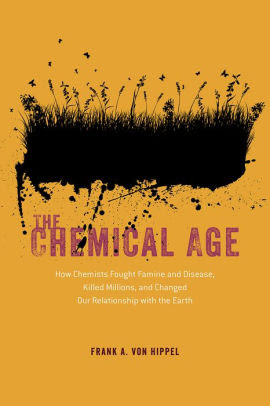
Frank A. von Hippel's "The Chemical Age"

Frank A. von Hippel is a professor of ecotoxicology at Northern Arizona University. He has taught ecology field courses in over twenty countries, and conducted research in the Americas, Africa and Australia. He hosts the Science History Podcast.

von Hippel applied the “Page 99 Test” to his new book, The Chemical Age: How Chemists Fought Famine and Disease, Killed Millions, and Changed Our Relationship with the Earth, and reported the following:
Page 99 of The Chemical Age continues a sentence from page 98:
…from plague and mice, and why, in the fifteenth century, the Jews of Frankfurt were forced to pay a tax each year of five thousand rat tails. But the greatest misery that rats conveyed was not typhus—rather, it was an unparalleled pandemic that destroyed civilizations of the Old World, twice.
Browsers opening my book to page 99 would have both a good and terrible idea of the content. The Chemical Age is the story of how scientists developed chemicals to fight famine, plagues, and other people, as well as the emergence of the environmental movement. Page 99 gives an inkling of the coverage of famine and plagues - famine, because rats were responsible for many famines and their associated diseases (hence why Jews were forced to kill rats), and plagues, because the text refers directly to one of the pandemics covered in the book (typhus) and indirectly to another (bubonic plague). But because page 99 is the tail end of the chapter on typhus, with only 1.5 sentences of content, the browser would be forgiven for having no inkling of what the book is about. Indeed, the book’s coverage of famine focuses on the Irish Potato Famine, not on rats. And the book’s coverage of pandemics does more than discuss their impacts on history; it chronicles discoveries of the responsible pathogen and animal vector and the struggle to eradicate the disease with chemicals. Chemical innovations to fight famine and pandemics comprise the first two sections of the book. Section 3 centers on innovations in chemical weaponry, and cross-talk between development of chemical weapons and pesticides. Section 4 discusses how widespread pesticide pollution led to the environmental movement. Clues to these sections are not revealed on page 99. Even a Talmudic scholar would find it difficult to infer how rat tails, typhus and taxes relate to chemical warfare and ecology.

Nevertheless, the page 99 test reveals something else about The Chemical Age. The book is also a story of racism, slavery, genocide and misogyny told within the context of colonialism and war. The scientists are the story – their struggles toward discovery, their competitions for renown, and their personal paths in a chaotic world. For Jewish scientists, anti-Semitism often overwhelmed their hopes to dedicate themselves to science. They were, in their own way, collecting rat tails as a tax on their existence. Similarly, The Chemical Age reveals how former slaves struggled against white supremacy as they cared for yellow fever patients in 18th century Philadelphia, how Irishmen responded to famine brought about by English subjugation, and how Rachel Carson overcame misogyny to alert humanity about corporate and government malfeasance. Each of these struggles redirected society’s trajectory to a better place.
Learn more about The Chemical Age at the University of Chicago Press website.

--Marshal Zeringue

Monday, August 31, 2020

Hilary Levey Friedman's "Here She Is"

Hilary Levey Friedman is a sociologist and expert on beauty pageants, childhood and parenting, competitive afterschool activities, and popular culture who teaches courses in the Department of Education at Brown University. She holds degrees from Harvard University, Princeton University, and the University of Cambridge.

Levey Friedman applied the “Page 99 Test” to her new book, Here She Is: The Complicated Reign of the Beauty Pageant in America, and reported the following:
Page 99 of Here She Is: The Complicated Reign of the Beauty Pageant in America is in Chapter 3, “Burning versus Padding Bras: The Establishment of Second Wave Feminism.” This part of the book begins with the 1968 protest outside of the Miss America Pageant, describes the following year when my mother competed at (and won!) Miss America, and connects the growing organization of the feminist movement (like the National Organization for Women) to changes in Miss America and other pageants in the 1970s.

Which brings us to Page 99, which details results of my original data analysis of pageant program books, beginning in the 1970s. To test pageant stereotypes (i.e. they are all blonde and blue-eyed women from the South) I collected and coded program books not just from Miss America but also Miss USA, America’s Junior Miss/Distinguished Young Woman, and the National Sweetheart Pageant. With Miss America I went even further, getting historical books from nine state pageants. These program books present information on contestants, judges, prizes, and more.

The first paragraph on Page 99 reads:
That Miss America’s state pageants would be focused on higher education during Second Wave feminism would not be an unreasonable assumption. But it would be wrong, at least when it comes to the information conveyed in the program books. Of the states in my sample, only three list college major in their program books, and not one of them for the entire time period. Mississippi listed it most frequently, for six of the years. Mississippi is often stereotyped as a state focused much more on how their Southern belles look than on how they think. But the Miss Mississippi program books suggest that education was a big focus of their program, and in these years, contestants’ measurements or their height and weight were never listed. While majors related to business and communications were the most common every year in Mississippi, among the winners the most common majors were science related.
In case you could not tell by now, Here She Is tells the story of feminism using the lens of beauty pageants. It begins in 1848 at Seneca Falls and goes up to the present day. Because Page 99 shows the originality of the data and argument in Here She Is, and showcases how I connect the history of pageantry to the present day, I do think it illustrates the book—even if it doesn’t have as much descriptive or personal details as other parts of it.
Learn more about the book and author at Hilary Levey Friedman's website.

The Page 99 Test: Playing to Win.

--Marshal Zeringue

Sunday, August 30, 2020

Suzanne Mettler and Robert C. Lieberman's "Four Threats"

Suzanne Mettler is the John L. Senior Professor of American Institutions in the Government Department at Cornell University. She is the author of several books, including The Government-Citizen Disconnect; Degrees of Inequality: How The Politics of Higher Education Sabotaged the American Dream; and The Submerged State: How Invisible Government Programs Undermine American Democracy.

Robert C. Lieberman is Krieger-Eisenhower Professor of Political Science at the Johns Hopkins University. He is the author of the award-winning books Shifting the Color Line: Race and the American Welfare State and Shaping Race Policy: The United States in Comparative Perspective, and has written about American politics for Foreign Affairs.

Lieberman applied the “Page 99 Test” to their new book, Four Threats: The Recurring Crises of American Democracy, and reported the following:
Page 99 of Four Threats concisely describes the brief movement toward multiracial democracy in the American South during Reconstruction. After the Civil War, newly liberated African Americans embraced voting rights with the support of the Republican party, which eagerly recruited and organized supporters among these new voters. Rates of voter registration and participating soared in southern states and African Americans used their newfound power to change the face of American government. Over the course of Reconstruction more than two thousand African Americans served in elected office, from state legislatures to state houses and the United States Congress. But Reconstruction and Black political empowerment provoked a violent reaction from southern whites that ultimately led, by century’s end, to the disenfranchisement of nearly four million African American men and the backsliding of American democracy.

Page 99 tells only a part of this story, and in fact it mostly serves as a setup for one of the central narrative events of the book, the white supremacist coup d’état in Wilmington, North Carolina, in November 1898. North Carolina was one of the successes of the New South, with a growing Black middle class and numerous African American office holders. In the mid-1890s, the state was governed by a biracial “fusion” coalition of Republicans and Populists. But in the 1898 election, white supremacist Democrats fought back, employing electoral fraud, voter intimidation, and violence, to defeat the fusionist incumbents—except in Wilmington, the state’s largest city, where the Fusionists retained power in the municipal government.

On November 10, two days after the election, white supremacists struck violently against the democratically elected government in Wilmington. Led by the Red Shirts, a paramilitary organization affiliated with the Democratic party, and backed by the White Government Union, a Democratic political club, a heavily armed force stormed the city. They set fire to the offices of the Daily Record, an African-American newspaper, and then advanced through Black neighborhoods, killing dozens. They dragged numerous prominent Black citizens, including the sheriff and the chief of police, from their homes and forced them to leave town. In the afternoon, they compelled the mayor, alderman, and other public officials to resign at gunpoint. They installed a new government of their own handpicked white Democrats.

Within months, Democrats finished the job of disempowering African Americans statewide, amending the state constitution to impose poll taxes and literacy tests as voting qualifications. Some states in the South had already taken such actions earlier in the decade, and after North Carolina acted, others followed suit. Soon all states in the region had put in place provisions that allowed white Democrats to rule unchallenged by denying African Americans the right to vote. Once Blacks lost political power, the full establishment of Jim Crow segregation followed. The federal government was complicit in these developments, first by turning a blind eye and failing to intervene, and later by enforcing segregation in the military and bureaucracy.

This episode is a devastating example of the repeated crises and reversals that American democracy has faced throughout its history, and this is the book’s central theme. Four threats make democracy hard to sustain: political polarization, conflict over who belongs as a full member of society (along racial lines, for example), high and rising economic inequality, and excessive executive power. In the crises of the 1890s, three of the four existed (all except the last), and the result was dramatic democratic backsliding that persisted for decades.

Today, for the first time, the United States faces all four threats, presenting unprecedented danger to the American experiment.
Learn more about Four Threats at the St. Martin's Press website.

--Marshal Zeringue

Friday, August 28, 2020

Dan Rabinowitz's "The Power of Deserts"

Dan Rabinowitz, Professor of Sociology and Anthropology at Tel Aviv University, is Chairman of the Association for Environmental Justice in Israel. He was Head of TAU's Porter School of Environmental Studies and Chairman of Greenpeace Mediterranean. He received the Pratt Prize for Environmental Journalism (2012) and the Green Globe Award for Environmental Leadership (2016).

Rabinowitz applied the “Page 99 Test” to his new book, The Power of Deserts: Climate Change, the Middle East, and the Promise of a Post-Oil Era, and reported the following:
When I wrote The Power of Deserts: Climate Change, the Middle East and the Promise of a Post-oil Era, I did not know about The Page 99 Test. Now that I do I can proclaim: even if my sole intention in writing the book had been to do well in this fun trial, I would not have changed The Power of Deserts one bit. Uncannily, of the 174 pages of the book, page 99 is the best single page to introduce a browser to my main argument.

The Power of Deserts begins by sketching how climate change could soon render parts of the Middle East uninhabitable. It then goes on to illustrate how the imminent demise of oil, attributable primarily to the declining costs of renewable energy, could spell ruin for major oil producers in the region. Hot, arid and utterly dependent economically on selling oil, Saudi Arabia, Kuwait, Qatar, Bahrein, United Arab Emirates and Oman, aka the Gulf Cooperation Council (GCC) Six, are particularly vulnerable to the double bind of Global Warming and the Post-oil era. There is however a silver lining: the region's huge solar potential. After decades of procrastination, all of the GCC Six have now in fact consolidated plans to have solar energy eclipse fossil fuels in electricity production and in transportation.

Then, at the bottom of page 99:
The fate of the excess oil and gas that will emerge when the six kingdoms by the Gulf decide to switch their energy and transportation sectors to solar energy is indeed intriguing. It leads, however, to a bigger question with truly global consequences. Are the GCC six likely to trigger an eclipse of fossil fuel not only in their own backyard but also internationally? Could they deem the global energy transition financially beneficial and politically prudent enough to conclude that rather than resist the eclipse, their own best interests demand embracing it? The concluding chapter raises thoughts on how this might eventually happen.
Page 99 thus sets the stage for the book's counterintuitive argument. To secure their own prosperity, the GCC Six could soon decide to (a) accelerate the transition of their energy and transportation sectors to solar; (b) invest heavily in renewable technologies and capacity abroad; then (c) dramatically reduce their oil and gas production. Accounting for 30 percent of global oil supply, this cut could nudge the price of oil just high enough to crown renewables as the only economically viable source of energy, and put the age of oil to rest. Making good on their earlier investment in renewables, the GCC Six will have elegantly substituted their dinosaurian dominance in the old oil trade for poll position in the energy market of the future. While they are at it, they could become key players in the global quest to curb climate change and carve themselves a place of honor in human history.
Learn more about The Power of Deserts at the Stanford University Press website and visit Dan Rabinowitz's website.

--Marshal Zeringue

Wednesday, August 26, 2020

Thomas A. Schwartz's "Henry Kissinger and American Power"

Thomas A. Schwartz is Distinguished Professor of History at Vanderbilt University, where he specializes in the foreign relations of the United States. He has served on the U.S. State Department's Historical Advisory Committee and as president of the Society of Historians of American Foreign Relations.

Schwartz applied the “Page 99 Test” to his new book, Henry Kissinger and American Power: A Political Biography, and reported the following:
Page 99 records a shift in the attention of Henry Kissinger from focusing on the Vietnam and Cambodia situation in June 1970, after the controversial invasion and the resulting domestic protests, to the Middle East, and the “War of Attrition” between Israel and Egypt. After noting how Nixon justified the results of the Cambodian “incursion,” I describe the congressional restrictions that will play a major role in how he and Kissinger will have to deal with trying to find a formula to end the war. The second paragraph briefly recaps what has happened in the Middle East before the Administration turns its attention to the situation in the middle of the summer of 1970. Nixon and Kissinger had met with the Israeli Prime Minister Golda Meir, recognizing that Israel had become a nuclear power but encouraging her not to say so publicly. I also describe how Nixon created a bureaucratic power struggle between his Secretary of State, William Rogers, and Kissinger, his National Security Adviser. Nixon initially kept Kissinger out of dealing with the Middle East because he did not think Kissinger, a Jew, could be objective in handling the issue. However, he gave Kissinger authority to deal with Moscow on all major issues, which inevitably concerned the Middle East, since the Soviets were heavily involved there. Kissinger caused some controversy in June 1970 when he said the United States wanted to “expel” the Soviets from the region.

A browser opening my book to page 99 would get the correct impression of how I discuss Kissinger’s role in the major foreign policy questions of the time. The reference to Israel as a nuclear power and to the continuing problems of the Middle East may also remind a reader that even though the events I describe occurred fifty years ago, we are still dealing with their consequences. The page also contains material that captures the complicated relationship between Kissinger and Richard Nixon. They were an odd couple in every way possible, although these differences came to matter less than their own love of exercising power and keeping secrets.

What is missing in the early part of the book is something that I think makes my book an original contribution. I used two major sources that have not been used as extensively in earlier works on Kissinger. One is the Nixon tapes, which are now fully accessible and open to researchers. The taping system only began in February 1971, and lasted until July 1973. The tapes provide an image of Kissinger that is quite different from how he portrayed himself in his memoirs, and reveal how much domestic political advantage influenced the foreign policy of the Administration. This is an argument which I emphasize, as Kissinger portrayed himself as a geopolitical thinker who was largely oblivious to partisan domestic battles. The second new source I used were the holdings of the Vanderbilt Television News Archive. The Archive holds recordings of the evening news since August 1968, and in this period, with only the three major networks, the vast majority of Americans got their news from television. Walter Cronkite was the “most trusted man in America,” and TV reporting influenced how Americans perceived Kissinger. In June 1970, Kissinger was not yet the widely known figure he would become after he made the secret visit to China in July 1971. The second part of the book uses these media archives to make an argument about how Kissinger came to dominate the foreign policy process as well as become one of America’s first “celebrity diplomats.” Ultimately, my book argues that Kissinger came to both exercise and symbolize American power in the world during this era.
Learn more about Henry Kissinger and American Power at the publisher's website.

--Marshal Zeringue

Monday, August 24, 2020

John Dickie's "The Craft"

John Dickie is Professor of Italian Studies at University College London. He is an internationally recognized specialist on many aspects of Italian history and his books have been translated into more than twenty languages.

Born in Dundee in 1963, Dickie was brought up in Leicestershire and educated at Loughborough Grammar School. He won a place at Pembroke College, Oxford, graduating in 1986 with a First in Modern Languages. He subsequently gained an MA and a DPhil at Sussex University. Since 1993 he has taught at UCL.

Dickie applied the “Page 99 Test” to his new book, The Craft: How the Freemasons Made the Modern World, and reported the following:
Page 99 of my book shows an eighteenth-century drawing of a woman. Or at least it looks like a woman. Yet she is sporting some distinctly masculine props: a staff, a sword and, above all, a Freemason’s apron. Those in the know will spot the busts of famous imposters on the wall behind her. As transpires from the text on page 99, the image is of the Chevalier d’Éon, a French lawyer, soldier, diplomat, spy, scandalist, Freemason and … (here comes the unanswerable question) transsexual? transvestite? Our modern labels are inevitably clumsy. The fact is that the Chevalière d’Éon, born male, adopted a female identity for much of her life, and was, in her later years, embraced as a Sister by the Freemasons of her home town in Burgundy.

The Freemasons emerged in Britain in the 17th and 18th centuries as a male-only fraternity. One of the many themes of my book is the curious forms of masculine identity cultivated and expressed by Freemasons, and the gender trouble that the Masons have often brought upon themselves. (The Chevalière’s case caused great embarrassment for the Masonic establishment in London, where she spent much of her diplomatic career.) In my final pages, I reflect that another subtitle for the book could have been ‘Four Centuries of Male Eccentricity’. In that sense, page 99 offers a representative snapshot.

The Chevalière crops up at the end of the book too. In 2010, after 250 years, French Freemasonry’s supreme authority, the Grand Orient, finally agreed to admit women on an absolutely equal footing with men. I had lunch with the woman who brought about the change, Olivia Chaumont, who is a great admirer of d’Éon. This is hardly surprising, since Olivia shares a similar narrative arc. Olivia was born male, and became a Freemason while she was still hiding her real identity. When she finally transitioned in 2007, she presented the Masonic authorities with a problem—one that they eventually and rather grudgingly solved by dissolving the barriers to full Sisterhood in the world’s most famous and influential secret society.
Visit John Dickie's website.

--Marshal Zeringue

Saturday, August 22, 2020

Steven D. Hales's "The Myth of Luck"

Steven D. Hales is Professor and Chair of philosophy at Bloomsburg University of Pennsylvania, USA. He works primarily in metaphysics and epistemology, and also in popular philosophy. He has been a Visiting Professor at the Universities of Cambridge, Turin, Edinburgh, and London. He is an award-winning writer and teacher, and has published numerous books and articles.

Hales applied the “Page 99 Test” to his new book, The Myth of Luck: Philosophy, Fate, and Fortune, and reported the following:
In The Myth of Luck I argue that there is no such thing as luck, that it is not a genuine property of the world and that claims of luck amount to no more than a subjective point of view on the events that affect us. Luck skepticism is a far-reaching view, not only because we so naturally assume that our lives are saturated with good luck and bad, but also because luck has deep philosophical roots. One of these areas is moral luck, which is what I discuss on page 99.

Moral luck is a puzzle. Immanuel Kant thought that no one deserves judgment for things that aren’t their fault. If something is outside of your control, you are neither praiseworthy nor blameworthy for it; you are properly judged only for things that are within your control. The problem is that there are unlucky events that apparently affect your blameworthiness. For example, imagine someone who, completely sober and attentive, drives through a large pile of leaves at the side of the road. She feels a couple of large bumps, but assumes they are sticks or packed-down yard waste.

There are two endings to this story. Ending one: it was just sticks, and it turned out to be an unremarkable fall drive in the country. Ending two: there were children hidden in the leaves, and the driver unwittingly killed them. In ending one, the driver did nothing wrong at all. But there’s a powerful intuition that the driver is more blameworthy, guiltier, in the case of ending two, even though it was just bad luck the bumps in the leaves were children and not sticks. If that’s right, then luck can affect how much you are to blame for things are are not your fault, and Kant must be wrong. On page 99 I consider the possibility that the driver merits equal moral assessment in both endings, and criticize that idea.

The page 99 test gives a window into one of the puzzles about luck that I consider in the book. While moral luck is something philosophers have worried about, the book as a whole is written for the intelligent and curious (but nonspecialist) reader, and examines luck from the ancient Greeks to cutting-edge work in experimental psychology, and is filled with illustrative anecdotes and examples from math, gambling, sports, and medicine.
Learn more about The Myth of Luck at the author's website.

--Marshal Zeringue