Monday, April 30, 2018

Heather Widdows's "Perfect Me: Beauty as an Ethical Ideal"

Heather Widdows is the John Ferguson Professor of Global Ethics in the Department of Philosophy at the University of Birmingham.

Widdows applied the “Page 99 Test” to her new book, Perfect Me: Beauty as an Ethical Ideal, and reported the following:
The demand to be beautiful is increasingly important in today’s visual and virtual culture. Rightly or wrongly being perfect has become and ethical ideal to live by, and according to which we judge ourselves good or bad, a success or failure. There are numerous consequences of the emergence of beauty as an ethical ideal - many are harmful as we suffer an epidemic of body image anxiety and engage in increasingly demanding and risky practices – simply to feel good enough, to feel normal. If trajectories continue and we do nothing to stop the rising demands the future will be bleak indeed. Yet there are positive aspects of the beauty ideal not least it is embodied and recognises we are situated in bodies which are key to how we understand and express ourselves. The first two arguments of the book claim that beauty is first and ethical ideal and second that it is global. Page 99 comes at the end of these arguments having argued that “the demandingness, and likely future demandingness, of the ideal is particularly troubling in light of the growing dominance of the ideal and its increasingly ethical nature.” It then goes on to begin what will become a claim that there is nothing ‘routine’ about daily beauty practices and it is easy to gradually move from the hairdresser to the clinic, and that we should rethink the assumptions we have about surgery being different from other beauty practices. On page 99 I being the description of routine beauty practices:
Routine practices include the daily application of lotions and potions. These have to be purchased and then used in the correct layered order; in itself a costly and time consuming business which has to be learned. For example, a standard beauty routine might be to maintain skin health using lotions, which may include the use of products in turn: cleanser, toner, serum, moisturiser, eye cream, BB/CC cream and primer. Having prepared and protected the skin then you are ready to apply make-up. The daily application of make-up is done by very many women, and again, requires the application of products in the correct way. Putting on ‘your face’ standardly requires the use of some or all of these products – foundation, powder, blusher, eye shadow, eye liner, mascara, lipstick – sometimes less, sometimes more and perhaps most for the contoured ‘natural look’.
I then go on to argue that under the beauty ideal the self is located in the body, but not just in the actual flawed body. It is also in the transforming body, a body of potential and possibility, and the imagined body, full of promise, the Perfect Me. The final arguments of the book are about choice, and why is it that we say we choose to engage and yet feel we have to.
Learn more about Perfect Me at the Princeton University Press website.

--Marshal Zeringue

Saturday, April 28, 2018

Edward G. Goetz's "The One-Way Street of Integration"

Edward G. Goetz is the Director of the Center for Urban and Regional Affairs at the University of Minnesota, and co-Director of the University-Metropolitan Consortium. He has published widely, including New Deal Ruins: Race, Economic Justice, and Public Housing Policy.

Goetz applied the “Page 99 Test” to his new book, The One-Way Street of Integration: Fair Housing and the Pursuit of Racial Justice in American Cities, and reported the following:
My book is about the problematic ways that we pursue racial residential integration in the U.S. In the book I argue, as others have before me, that integration efforts have been and will continue to be an ineffective way of achieving racial justice in America.

Page 99 of The One-Way Street of Integration provides an illustration of at least two of the arguments that underpin my case. The page begins mid-sentence, describing the aborted effort during the Nixon Administration in the early 1970s to force predominantly white suburban communities to accept federally subsidized housing. Nixon’s activist-HUD Secretary, George Romney (Mitt’s father), aggressively pursued the integration of suburban communities by attempting to sanction exclusionary suburbs that refused to accept low-cost, HUD-subsidized housing. His efforts triggered a predictable white-backlash, ironically erupting in his home-state of Michigan, against such a heavy-handed approach. In the face of this white, suburban backlash, Nixon quickly marginalized Romney and undercut his initiative. The agency’s bold integration effort was over.

The bottom half of the page notes that the leaders of black communities in American cities were not even very supportive of Romney’s initiative, seeing in it a flow of housing investment away from central cities and into suburban communities, a flow that would further impoverish those cities and benefit very few black families in the end.

The rest of the book presents a larger set of arguments regarding integration efforts, as well as a historical overview of how this issue has been manifest in U.S. housing policy since the 1940s. Integration efforts are generally contrasted with ‘community development’ efforts that focus instead on building community power as a means of attaining greater racial justice.

The book argues that integration efforts accept white racism and build policy efforts to accommodate that racism. Integration efforts place the burden for integration on people of color, requiring that they accept the difficulties of moving into often hostile communities, but doing so in small enough numbers not to trigger white flight. Thus, integration efforts both mandate that people of color be minorities in all of the communities in which they live, and they elevate the ‘mostly white’ neighborhood as the ideal. Integration is too often defined as that degree of diversity that whites will tolerate. In contrast, community building approaches focus on strengthening the economic and political capacities of communities of color, an approach to racial justice that is not based on accommodating white racism.
Learn more about The One-Way Street of Integration at the Cornell University Press website.

The Page 99 Test: New Deal Ruins.

--Marshal Zeringue

Thursday, April 26, 2018

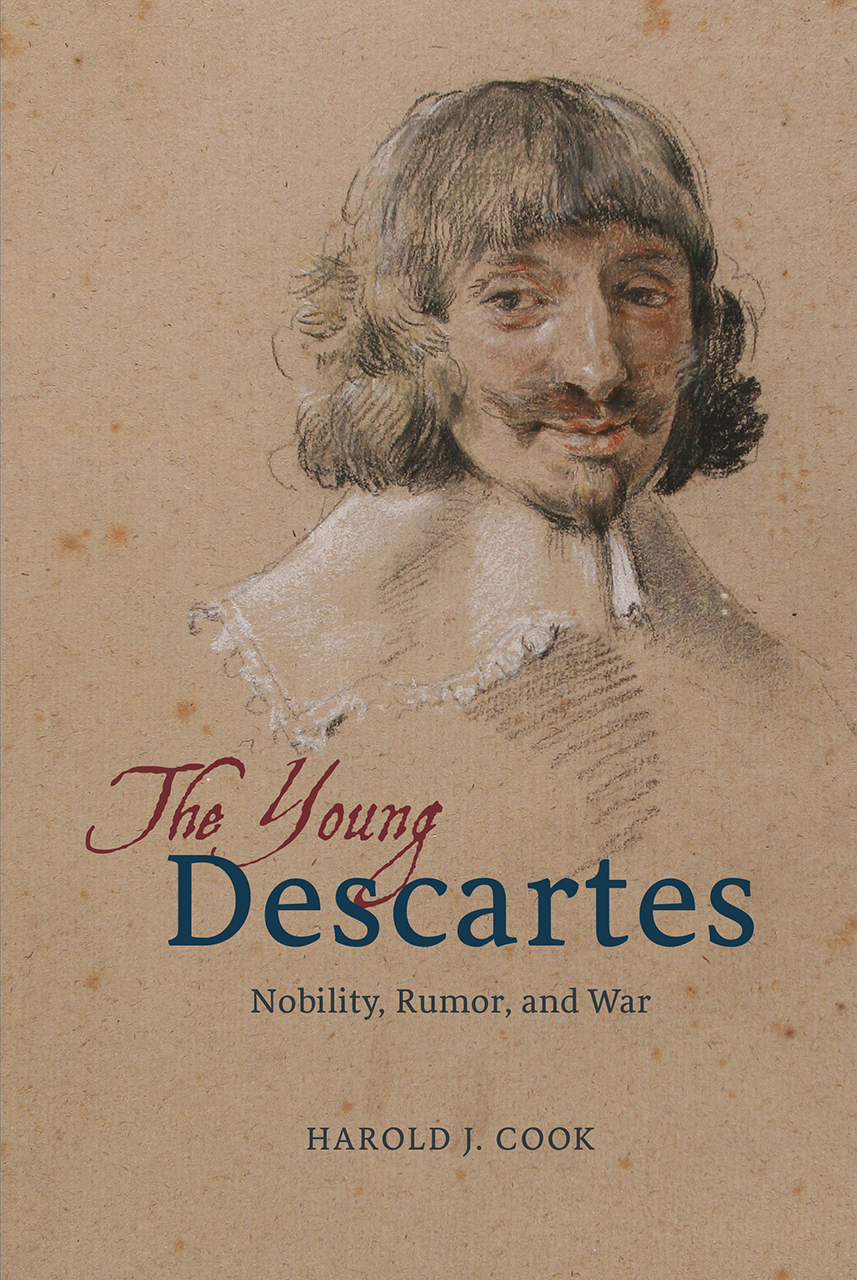
Harold J. Cook's "The Young Descartes"

Harold J. Cook is John F. Nickoll Professor of History at Brown University. He is author of several books on the early modern period, including Matters of Exchange: Commerce, Medicine, and Science in the Dutch Golden Age and Trials of an Ordinary Doctor: Joannes Groenevelt in Seventeenth-Century London. His recent work has focused mainly on the global entanglements of science and medicine, politics, and economies.

Cook applied the “Page 99 Test” and the Page 69 Test to his new book, The Young Descartes: Nobility, Rumor, and War, and reported the following:
Some years ago, this site's editor kindly invited me to take what was then the page 69 test, which I thought worked well for uncovering a quick understanding of the argument of my book. It is now the page 99 test. So when invited this time, I compared the two pages of my The Young Descartes, and found that in this case page 69 spoke more clearly than page 99.

Against the common mythology of Descartes as a loner, the book shows instead that he could have stepped from the pages of The Three Musketeers. I have no brief against the position that the writings of Descartes were fundamental in helping to lay down the foundations of modern philosophy, and possibly of modern science. In fact, I admire many of his works. But I have come to see his views not as rising above his world but as emerging from it. He was good with the sword, trained in military engineering, and a lover of both men and women, passionately engaged with life. When he wrote his chief works, however, he did so not in France but in the Dutch Republic. The reason was, I think, that he had become an exile. His early life explains why that might have been so, thereby illuminating the kind of people and problems that shaped his understanding.

But to get back to particulars: If we turn to page 99 of the book, we find passages about what might have been the motivations taking Descartes to the coronation of the Emperor in Frankfurt, and from there further into Germany in the opening stages of the 30 Years War. It is a page that probably would not make sense without having read the pages beforehand that set it up.

Page 69, however, introduces the event of 1617 that caused Descartes (then age 21) to give up hope of patronage from among the great nobles of France: the assassination of Queen Marie de Medici’s favorite at the behest of her son, who thereby became King Louis XIII. The coup caused the former queen to flee Paris. So did Descartes.

There is also a passing reference on the page to Marie de Rohan, later the duchesse du Chevreuse, one of the most intriguing and powerful women of the day. Her son would later translate Descartes’s Meditations from Latin into French, with the author’s help. I would like to think that the philosopher knew her, too.

So I have to conclude that in this case the page 69 test works better than the page 99 test.
Learn more about The Young Descartes at the University of Chicago Press website.

--Marshal Zeringue

Wednesday, April 25, 2018

Michele Dillon's "Postsecular Catholicism"

Michele Dillon is Class of 1944 Professor of Sociology at the University of New Hampshire.

She applied the “Page 99 Test” to her new book, Postsecular Catholicism: Relevance and Renewal, and reported the following:
Page 99 in Postsecular Catholicism happens to pinpoint the book’s central argument: the necessity – and the tensions - in Catholicism between maintaining continuity with its doctrinal tradition and simultaneously being open to embracing new directions so that it can maintain relevance amid societal change. Page 99 is from chapter 5 where, focusing on the U.S. bishops’ religious freedom campaign, I argue that the bishops’ turn to contraception and religious freedom “is interesting from a postsecular perspective because it illuminates both the secular openness of the Church and the limits to that openness.” What I mean by this is that prior to the Affordable Care Act (ACA) contraception mandate, church officials largely ignored Catholics’ use of artificial contraception despite its prohibition by church teaching. Their relative silence showed tacit acceptance of the fact that Catholics incorporate their (secular) lived experiences and expectations into their Catholicism, something further evident in Catholics’ engagement in and/or support for gay marriage, and for divorce and remarriage without an annulment. This epitomizes the postsecular reality: the mutual relevance and intermeshing of both religious belief and secular experience in individual lives and in civil society. Recognition of their entanglement is well captured by Pope Francis. He frequently emphasizes that doctrinal ideas should be in ongoing conversation with secular realities. Yet the U.S. bishops (and others) remain leery of secularism. And they strategically used the ACA mandate as a political and legal opportunity to push back not against contraception per se, but against secularism and more specifically, the growing acceptance by Catholics and others of same-sex marriage, a turn which they see as severely undermining church teachings on marriage (and on sexual difference). The bishops’ campaign highlights the limits both in the secular understanding of religion and in the church’s ability to negotiate secular expectations especially in the realm of sex and gender. Yet, as the recent Synod on the Family showed, it is possible to use existing church doctrine to forge a new understanding that is more inclusive of diverse and increasingly secularized sexual relationships and families.
Learn more about Postsecular Catholicism at the Oxford University Press website.

--Marshal Zeringue

Tuesday, April 24, 2018

Michael Ramirez's "Destined for Greatness"

Michael Ramirez is an associate professor of sociology at Texas A&M University-Corpus Christi.

He applied the “Page 99 Test” to his new book, Destined for Greatness: Passions, Dreams, and Aspirations in a College Music Town, and reported the following:
Destined for Greatness investigates how men and women successfully pursue informal music careers in the iconic Athens, Georgia. It is largely a life course study that retrospectively examines musicians’ early experiences in life to explain how they commit to music in adulthood. Page 99 falls in Chapter 3 of the book, which examines the processes of adopting a musician identity.

What page 99 illustrates well is the challenge musicians face in committing to musical careers upon their entrance to adulthood. Music tends not to pay the bills, so musicians of course have “other jobs” outside of music. Page 99 is the ideal page to situate the types of jobs that allow or prevent flexibility with musical commitments. Some musicians are able to situate their work commitments into their musical pursuits with little tension. Other musicians, however, due to the context and time intensity of their jobs have difficulty balancing work with music. One outcome for these musicians is the consideration of downgrading their commitment to music for a more normative adulthood. In some ways, page 99 highlights one of the driving themes of the book as a whole: musicians must reconcile issues of adulthood, in this case employment, to successfully fit music into their adult lives.

The book can be read as a love story that musicians tell of their devotion to music. And like any good love story, it is one fraught with struggle, with questions of whether it is worth the sacrifice, yet ultimately framed as entirely worthwhile and as providing meaning in life.
Learn more about Destined for Greatness at the Rutgers University Press website.

--Marshal Zeringue

Sunday, April 22, 2018

Keith Gandal's "War Isn’t the Only Hell"

Keith Gandal is a professor of English at City College of New York. He is the author of The Gun and the Pen: Hemingway, Fitzgerald, Faulkner, and the Fiction of Mobilization.

Gandal applied the “Page 99 Test” to his new book, War Isn't the Only Hell: A New Reading of World War I American Literature, and reported the following:
War Isn’t the Only Hell attempts to put American World War I literature in its proper historical context. It also tries to expand the canon, beyond the work of famous Lost-Generation authors Hemingway, Faulkner, Fitzgerald, Dos Passos, Cummings, and Katherine Anne Porter. Our sense of American Great War writing--and thus of the American experience--is limited and misguided. Unlike every other combatant nation, our lasting literature was written entirely by noncombatants; moreover, we don’t understand what it meant to be an American noncombatant male and why Lost-Generation writing is the way it is.

American World War I literature has long been interpreted as an alienated outcry against modern warfare and propaganda. This reading ignores the US army’s unprecedented attempt, during the war, to assign men—except, notoriously, African Americans—to positions and ranks based on merit. And it misses the fact that the culture granted masculinity only to combatants, while noncombatants experienced a different alienation: shame.

Drawing on military archives and current historical research, the book discusses the work of thirteen significant writers: as responses to the shocks of war and meritocracy. The supposedly antiwar texts of the social-privileged male Lost-Generation authors addressed—often in coded ways—noncombatant frustrations. Meanwhile, the hard-hitting works of combat soldiers William March, Thomas Boyd, Laurence Stallings, and Hervey Allen were partly shaped by experiences of meritocratic recognition, especially meaningful for socially disadvantaged men.

Even the sole World War I novel by an African American veteran, Victor Daly, reveals a mixed experience of army discrimination and empowerment among the French. Finally, three women authors—Porter, Willa Cather, and Ellen La Motte, a frontline nurse—saw the war create new opportunities, prerogatives, and obligations for women. Ultimately, this literature registered the ways in which innovative military practices and a foreign war unsettled traditional American hierarchies of class, ethnicity, gender, and even race.

The Page 99 Test has limited applicability here, as this page concludes a chapter that shows how Hemingway’s A Farewell to Arms appealed to noncombatants. It still concerns one of our literary giants.

Most of the book is dedicated to less familiar writers. Its title comes from Daly, who covertly tells a taboo racial story that has been largely missed by critics. During this centennial of American involvement in the war, I suggest we broaden our canon so this long-forgotten American war becomes a major cultural touchstone.
Learn more about War Isn't the Only Hell at the Johns Hopkins University Press website.

--Marshal Zeringue

Friday, April 20, 2018

David Vogel's "California Greenin'"

David Vogel is professor emeritus in the Haas School of Business and the Department of Political Science at the University of California, Berkeley.

He applied the “Page 99 Test” to his new book, California Greenin': How the Golden State Became an Environmental Leader, and reported the following:
Page 99 of California Greenin’ describes the opposition of local governments and business firms to one of California’s most important environmental initiatives, namely the establishment of the San Francisco Bay Conservation and Development Commission. The world’s first coastal development agency which was made permanent in 1969 the Commission was given planning authority over all developments within 100 feet of the Bay’s shoreline. Its enactment by the California state legislature was the culmination of an extensive grassroots campaign by the Save Our Bay Action Committee, comprised of citizens who wanted to stop the beautiful San Francisco Bay from being rapidly filled it. Since western settlement, the amount of open water in the Bay had been reduced by more than 300 square miles while less of a quarter of the original tidal marshlands that had surrounded the Bay remained. Without strong and effective government regulation, one of California’s best known natural features would have continued to shrink.

The Commission’s establishment represents one of several important and innovative environmental initiatives in California that are described and explained in the book. They include the nation’s first protected wilderness area in Yosemite (1864), three large national parks to protect the sequoias in the Sierras, (1890), the nation’s first emissions standards for pollutants from motor vehicles (1964) and the California Coastal Commission (1976). More recently California has led the United States in issuing energy efficiency standards for appliances, buildings and motor vehicles and in addressing the risks of global climate change.

The book argues that California’s long history of environmental policy leadership is linked to three factors. First, many citizens have effectively supported regulations to protect the state’s unusually attractive but also highly vulnerable natural environment from destructive economic developments. Second, these citizen efforts have often been backed by business firms who benefiting by putting California on a “greener” growth trajectory. Thus both steamship firms and the Southern Pacific Railroad lobbied to protect California’s wilderness areas in order to promote tourism in the state, while the real estate industry in Los Angeles supported pollution control regulations to improve the city’s deteriorating air quality. Third, California has developed a regulatory bureaucracy that has enabled the state to develop and enforce its own environmental regulations - often independent of the federal government. Its effective and extensive environmental regulations has enabled California to remain a “golden state.”
Learn more about California Greenin' at the Princeton University Press website.

The Page 99 Test: The Politics of Precaution.

--Marshal Zeringue

Thursday, April 19, 2018

Kate White's "The Gutsy Girl Handbook"

Kate White is the New York Times bestselling author of twelve murder mysteries and thrillers and several hugely popular career books, including I Shouldn’t Be Telling You This: How to Ask for the Money, Snag the Promotion, and Create the Career You Deserve, and Why Good Girls Don’t Get Ahead but Gutsy Girls Do. For 14 years, White was the editor-in-chief of Cosmopolitan magazine, where she increased overall circulation by 30 percent and made Cosmo the #1 magazine in the U.S. in single copy sales.

White applied the “Page 99 Test” to her new book, The Gutsy Girl Handbook: Your Manifesto for Success, and reported the following:
I’ve done this test before (with my mysteries and thrillers, as well as my non-fiction business books) and the results are uncanny. It’s based on an idea suggested by the novelist Ford Madox Ford: that if you open a book to page 99, “the quality of the whole will be revealed to you."

That’s certainly the case with my new book, The Gutsy Girl Handbook: Your Manifesto for Success. What appears on page 99 really does seem to capture the essence of the book.

I start off the page talking about the importance of asking for opportunities in the workplace. We hear a lot today about how critical it is to ask for money (whether a raise or a great starting salary), and that’s true. You have to come right out and ask for the money you want or you may end up short changed.

But it’s just as important to ask for opportunities. Don’t wait to be assigned special projects. Raise your hand and volunteer to take those on.

The whole point of my book is that in order to succeed, women need to be as gutsy as possible in the workplace, and asking for opportunities is a key way to do that. (And, hey, this works for guys, too!)

The kind of projects you should be asking for are ones that will help out your boss, strengthen your strengths, force you out of your comfort zone, increase your confidence, enhance your reputation at work, and set you apart from the pack. Perhaps it’s running a new team or representing the company at an industry event.

That’s the kind of work that gets you noticed and promoted.

And what if there doesn’t seem to be a project that fits the bill? Create one. Ask, “What are we missing here, what problem can I solve in my department?”

I once mentioned this strategy in a speech I gave and a woman later wrote me explaining how well it had worked for her. She was employed as an assistant in the PR department of an insurance company and after hearing my comments, she asked, “What’s missing?” She realized that her department lacked a crisis manual, so she took it upon herself to write one. That step and a few others like it led to her promotion from assistant to associate.

So don’t wait. Raise your hand and ask. Being gutsy is knowing that in order to succeed, we often have to take that first step, rather than be polite and wait for someone to tap us for the opportunity.
Visit Kate White's website, Facebook page, and Twitter perch.

The Page 69 Test: Even If It Kills Her.

The Page 69 Test: Eyes on You.

--Marshal Zeringue

Tuesday, April 17, 2018

J. E. Smyth's "Nobody's Girl Friday"

J. E. Smyth is Professor of History at the University of Warwick and author or editor of Reconstructing American Historical Cinema from Cimarron to Citizen Kane (2006), Edna Ferber's Hollywood (2009), Hollywood and the American Historical Film (ed., 2012), Fred Zinnemann and the Cinema of Resistance (2015), and the BFI classics monograph on From Here to Eternity (2015).

Smyth applied the “Page 99 Test” to her new book, Nobody's Girl Friday: The Women Who Ran Hollywood, and reported the following:
When I turned to page 99 of Nobody’s Girl Friday, I had to laugh—it was the one part of the book where I discuss director Ida Lupino’s career. In old Hollywood lore, Lupino stands out as the lone woman in a male-dominated occupation (her career transition occurred a few years after director Dorothy Arzner’s retirement). But the trouble with most histories of filmmaking during this era is the fixation on the director as a film’s only author. Scholars, critics, and, to a lesser extent, audiences are obsessed with the notion of the director-auteur—something popularized in the 1950s with the French New Wave and critics such as Andrew Sarris. But films aren’t novels or paintings—cinematic authorship is inherently collaborative. Back in the 1920s, 30s, and 40s, editors – including Barbara McLean and Margaret Booth—could order retakes on a director’s work and were as responsible for assembling the classic films we love. They consulted with producers and writers. As my book reveals, women undertook many of these jobs, including Joan Harrison and Virginia Van Upp, two writers who transitioned into producing in the 1940s.

Nobody’s Girl Friday will hopefully make readers recalibrate what they think they know about women and power in studio-era Hollywood—but my work also undercuts a lot of popular and academic expectations about directors and authorship.

Lupino began as an actress, but like many of her peers in the 1940s (Bette Davis, Kay Francis, Rita Hayworth, and Constance Bennett), she branched out. Some of her early roles were produced by none other than Mary Pickford, cofounder and head of UA. Industry people today, students, and my historian colleagues are often stunned when I list how many women worked for the studios and the diverse professions they chose. Women rose to top executive positions, they lead their own agencies, ran guilds and unions, won Academy Awards, and controlled gossip columns. And women worked together and even supported each other’s careers—there was feminism and camaraderie (it didn’t just start with #MeToo!). After all, it was during this time that Democratic and Republican women finally came together to endorse the Equal Rights Amendment.

As I mention on page 99, Hedda Hopper (who we often dismiss as a Red-baiting shrew) adored Ida Lupino’s work and supported her career regularly in her syndicated column. Women in Hollywood’s “golden era” weren’t just secretaries and stars—and their industry recognized and even celebrated Hollywood’s leading role in gender equality. Lupino was touted as the new Orson Welles, and she subverted expectations with a lot of her tough, noirish productions. But all good things come to an end, and when the studio system started to fail through a combination of financial pressure, media competition, and the blacklist, women lost most of their power. By the 1950s, Lupino did indeed seem like a lone, embattled woman director. She, and many others moved into the television industry, but never achieved the wealth and influence they once had in Hollywood. It’s time we remembered them all—not only director “auteurs” such as Lupino, but writer Mary C. McCall Jr., secretary Silvia Schulman, executives Ida Koverman and Anita Colby, story editor Kay Brown, editor Barbara McLean, producer Harriet Parsons-- and many, many others.
Learn more about Nobody's Girl Friday at the Oxford University Press website.

--Marshal Zeringue

Sunday, April 15, 2018

Stuart Kirsch's "Engaged Anthropology"

Stuart Kirsch is professor of anthropology at the University of Michigan. His earlier work was influenced by two decades of advocacy on behalf of the Yonggom (or Muyu) people in New Guinea, including their response to the environmental impact of the Ok Tedi copper and gold mine. He is the author of Reverse Anthropology (2006) and Mining Capitalism (2014).

Kirsch applied the “Page 99 Test” to his new book, Engaged Anthropology: Politics beyond the Text, and reported the following:
In Engaged Anthropology, I tackle questions about engaged research head-on, examining projects in which I have been involved in a number of different countries in the Pacific and the Amazon, as well as on campus. In particular, I ask whether engaged research methods produce adequate ethnographic description, whether they contribute to constructive political outcomes, and whether they provide results that are of value beyond the immediate context.

On page 99, I describe an attempt to establish a conservation and development project in Papua New Guinea in the 1990s. I originally visited the area to assess whether such initiatives offer viable alternatives to destructive forms of resource extraction like the Ok Tedi mine.

Page 99 describes differing attitudes towards development and protection of the environment among the four groups of people living in the Lakekamu River basin. For example, the Kurija reject:
mining and logging projects because of their likely impacts on wildlife and the local river system… Cut off from their political allies in the mountains to the east, and unsuccessful in their ventures in the closest urban centers of Kerema and Port Moresby, the Kurija regard subsistence agriculture and hunting as an integral part of their future; and consequently, they recognize the need to protect the resources of the river basin… Practical reliance on local resources, rather than conservation in the abstract, fuels Kurija desires to protect the Lakekamu River basin… In addition, by presenting themselves as responsible guardians of the southern half of the Lakekamu River basin, they hoped to gain support from Conservation International in their territorial disputes [with their neighbors].
In contrast,
The Kovio response to the initiatives sponsored by Conservation International differed significantly from the positions taken by their neighbors. Given their participation in the cash economy and their comparative political clout, they speak more favorably and confidently about the prospects of development... The Kovio make broad claims to much of the territory in the Lakekamu basin; and in the recapitulation of historical patterns of exchange, they regard the economic agenda for this territory as theirs to dominate.
The other two groups in the area
responded positively to some of the economic initiatives proposed by Conservation International… The major concern for the Biaru was that they continue to enjoy unimpeded access to their artisanal mining projects in the hills and mountains to the northeast… And while the Kamea had no objection to the projects proposed by Conservation International, they were equally interested in exploring other development options.
In revisiting an earlier article I wrote on the initiative, I acknowledge that while my ethnographic research correctly identified the reasons why the conservation project would ultimately fail—due to competing land claims and divergent aspirations for the future of the Lakekamu River basin—I remained optimistic about its prospects. Thus, the chapter shows how engaged anthropologists may be influenced by their desire to contribute to alternative outcomes.

Like the other examples discussed in the book, page 99 provides candid insight into the largely unexamined “backstage” of engaged research.
Visit Stuart Kirsch's webpage.

The Page 99 Test: Mining Capitalism.

--Marshal Zeringue