Wednesday, April 30, 2014

Gillen D'Arcy Wood's "Tambora: The Eruption that Changed the World"

Gillen D'Arcy Wood is professor of English at the University of Illinois, Urbana-Champaign, where he directs the Sustainability Studies Initiative in the Humanities. He has written extensively on the cultural and environmental history of the nineteenth century.

He applied the “Page 99 Test” to his latest book, Tambora: The Eruption That Changed the World, and reported the following:
My new book—about the volcano Tambora’s disastrous eruption in 1815—rides upon its volcanic plume across continents and oceans, from Indonesia to India, and from New England to The Arctic. On page 99, my airy journey has taken me as far as Yunnan, and the remote rice-growing hamlets of western China, surrounded by mist-wrapped mountains of the Himalayan range. I tell how a deadly veil of Tambora’s volcanic dust depressed temperatures across Yunnan for three long years, wiping out rice crop after rice crop, and plunging the people into a desperate famine.

Be assured, Dear Reader, I worked hard to do justice to this terrible, forgotten story! But nothing I could write was a match for my historical source, the Yunnan poet Li Yuyang, who left harrowing poems of a people devastated by extreme weather anomalies of the kind we now associate with climate change. At key moments, therefore, I simply let Li Yuyang tell the story of the human tragedy of Tambora in China.

In his poem “Bitter Famine,” Li Yuyang describes the climate crisis at its worst in the autumn of 1817, when the people of Yunnan descended into a living hell, their prosperous communities transformed into a Dantean circle of starvation and death.
Outside, the starved corpses pile high,

While in her room the young mother

Waits upon her child’s death. Unbearable

Sorrow. My love, you cry to me to feed you—

But no one sees my tears. Who can I tell which aches

More? My heart or my body wasting away?

She takes her baby out to the deep river.

Clear and cool, welcome water...

She will care for that child in the life to come.
When mothers kill their children out of mercy—as they did the world over in the Tambora years 1815-18—we know we have entered the heart of darkness.

These Tambora famine poems appear for the first time in English translation in my book (a story unto itself). Even Chinese scholars I spoke to had never heard of Li Yuyang. And the same might be said of the whole book, which instead of re-telling the same old textbook histories, rewrites the Post-Napoleonic nineteenth century through the lens of Tambora’s eruption—the most devastating climate change event of the modern era.
Learn more about Tambora at the Princeton University Press website.

--Marshal Zeringue

Tuesday, April 29, 2014

Joy A. Schroeder's "Deborah's Daughters"

Joy A. Schroeder a Lutheran pastor, teaches church history at Capital University and Trinity Lutheran Seminary (Columbus, Ohio) where she holds the Bergener Chair in Theology and Religion. She is interested in the history of women in religion, the history of biblical interpretation, medieval mysticism, and the church's response to sexual and domestic violence.

Schroeder applied the “Page 99 Test” to her latest book, Deborah's Daughters: Gender Politics and Biblical Interpretation, and reported the following:
Deborah’s Daughters traces the “afterlife” of a biblical character through two thousand years of Jewish and Christian interpretation. The biblical Deborah was a prophet, judge, poet, and military leader in ancient Israel (Judges 4-5). She ordered the Israelite commander Barak to attack the army of a Canaanite king who oppressed them. Barak refused to go to battle without her. Deborah’s example was used in arguments for and against women’s expanded roles in synagogues, churches, politics, and society. Through the centuries, Deborah, a forceful and authoritative biblical figure, inspired a multitude of women, including female rabbis, pastors, preachers, judges, soldiers, authors, suffragists, and queens. These women claimed Deborah as precedent for their extraordinary roles.

Numerous male interpreters were uncomfortable applying Deborah’s example to the women of their own day. Some found ways to limit or “domesticate” the biblical Deborah. Many men highlighted her gentleness and submissiveness, character traits not actually found in the biblical text! A few criticized Deborah for being too “haughty” in her interactions with Barak. One twentieth-century Christian minister accused the prophetess of being a bad homemaker, warning his female readers to confine their activities to the household rather than following Deborah’s example of public service and employment outside the home. However, a surprising number of men supported women’s expanded roles, or, at least, they affirmed particular exceptions to the rule of male authority and female submission. The presence of a godly prophetess in scripture was evidence of women’s leadership gifts and God’s approval.

On page 99, I quote from Protestant reformer Peter Martyr Vermigli (1499-1562), who addressed Queen Elizabeth I shortly after she ascended to the throne in 1558. Elizabeth styled herself as “England’s Deborah,” raised up by God to liberate her nation from foreign tyranny and Roman Catholic “idolatry” following the reign of Mary Tudor. Writing to Elizabeth to register his support for her reign and to offer advice, Vermigli invokes the examples of courageous biblical women:
Play the role of holy Deborah for our times. Join to yourself some godly Barak. Bring the Israelites who are oppressed in various ways into the sincere and pure liberty of the Gospel…. May these holy women give encouragement to Your Majesty, and do not let yourself be shaken because you were born a woman and not a man.
On the same page of Deborah’s Daughters, I offer this commentary:
Vermigli urges the queen to find a male partner, “some godly Barak” to share her leadership. He may be talking about her taking a husband, though more likely he feels she needs the special assistance of a male official to give her aid. Since he mentions the need for Barak in the context of gaining liberty from the oppressive Canaanites (symbolizing the Roman church), he may be particularly concerned that she enlist a male leader for the work of church reform.
Thus page 99 offers one of the book’s numerous examples of how interpreters read Deborah’s story through their particular cultural lenses, to support their own agendas and views about women’s roles.
Learn more about Deborah's Daughters at the Oxford University Press website and Joy A. Schroeder's page at Amazon.

--Marshal Zeringue

Monday, April 28, 2014

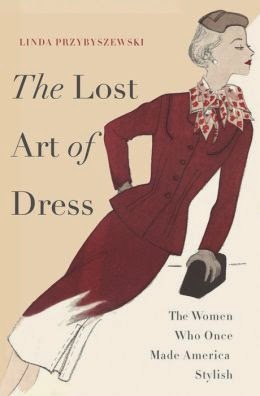
Linda Przybyszewski's "The Lost Art of Dress"

Linda Przybyszewski is an associate professor of history at the University of Notre Dame. The author of The Republic According to John Marshall Harlan, the editor of Some Memories of a Long Life, 1854-1911, as well as a prize-winning dressmaker, she lives in South Bend, Indiana.

Przybyszewski applied the “Page 99 Test” to her new book, The Lost Art of Dress: The Women Who Once Made America Stylish, and reported the following:
“Who gets the job? Hint: It is not the woman who looks ready to dance the can-can.” These are the first words of p. 99 of The Lost Art of Dress. They accompany an illustration set in an office from a 1928 book on dress. On the left is a young woman fluffing her hair and wearing a dress trimmed all over with flowered flounces, while long ribbons trail from her wrists. On the right stands a woman, memo in hand, wearing a dark dress trimmed only with lighter collar and cuffs. She will get the job. Page 99 captures one of the central lessons of the Dress Doctors, as I call them. The Dress Doctors taught Americans how to dress for the 20th century which they saw as a time of unprecedented opportunity for women. Freed from tight corsets and the long skirts of the Victorian Era, modern woman could wear clothing that allowed her to move freely. She got more education as high schools spread across the country. She could take part in sports from tennis to skiing. She was a full citizen since the 19th Amendment guaranteed her the vote. As a housewife, she could bring the insights of science into running her household. And she could work in a range of new fields, including office work. For each of these occasions, the modern woman needed the right clothes. The Dress Doctors advised the business woman to opt for clothing that mirrored business itself: precise, focused, practical, and impersonal. Women would not “lose the distinction and charm of their femininity” if they did because they could apply another of the Dress Doctors’ lessons: how to use the principles of art to create beauty in dress. And this can be done without spending a fortune because a small wardrobe of beautiful clothing, perfectly suited to the occasions of our lives, is all that we need. A lesson as valuable today as when the Dress Doctors first wrote it.
Visit Linda Przybyszewski's website and blog.

--Marshal Zeringue

Saturday, April 26, 2014

Steve Clarke's "The Justification of Religious Violence"

Steve Clarke is a Senior Research Fellow in the Centre for Applied Philosophy and Public Ethics at Charles Sturt University in Australia, and a Senior Research Associate of the Uehiro Centre for Practical Ethics at the University of Oxford. He has published over sixty academic papers and is the author of Metaphysics and the Disunity of Scientific Knowledge (1998), and co-editor of three books including Religion, Intolerance and Conflict: a Scientific and Conceptual Investigation (with Russell Powell and Julian Savulescu, 2013).

He applied the “Page 99 Test” to his latest book, The Justification of Religious Violence, and reported the following:
As the name suggests, this is a book about justifications offered for violence that appeal to religion. I examine the reasoning of the religiously violent. I find that it typically exemplifies the same logical forms found in ordinary secular justifications for violence. What is distinctive about religious justifications for violence is that they are usually grounded in the rich metaphysics of religious worldviews. Persistent themes can be discerned in the justifications for violence that have been offered in the name of different religions. Many involve appeals to a state of ‘cosmic war’, many involve appeals to an afterlife, and many involve appeals to sacred values.

Page 99 is in the middle of Chapter Four, ‘Justifying Violence, War and Cosmic War’. I start the chapter by looking at secular justifications for violence. I then focus on secular justifications for war, especially those developed in the ‘just war’ tradition, before showing how these can be transposed into justifications for violent action in religious ‘cosmic wars’. A cosmic war is a grand struggle between good and evil that takes place across (and perhaps beyond) the sweep of history. In the Christian tradition, a cosmic war is said to be taking place between God and Satan; and some Christians believe that they are justified in acting violently, in order to contribute to the war effort. In 1997, two members of the American Christian group ‘The Gatekeepers’ murdered a former member, whom they believed to have become a government informer. They believed that Satan had taken control of the US Government and that, therefore, the former member was working for Satan. In their view they were helping God to win the cosmic war against Satan by killing the former member.

The text on p. 99 is part of a discussion of pacifist objections to war. The discussion takes place after I’ve examined just war theory and before I discuss cosmic war. If you only read this page you’d be left with a misleading impression of the book’s contents. The discussion on the page is about ways in which pacifist opposition to war might be given secular philosophical support. But the book is about religious justifications for violence. Is the quality of the writing on p. 99 representative of the quality of the writing in the book? I leave it to readers to decide. Here is a sample from that page:
If consequentialists are to be absolutist pacifists then they will need to find some basis for a rule against ever going to war. A rule-utilitarian form of pacifism looks useful here, but it is not clear that a strict application of such a rule, in circumstances where the possibility of war looms, would tend toproduce the best consequences, as the absolutist consequentialist pacifist needs to claim. If, for example, at the outbreak of World War II, the Allied powers had not resisted the Axis powers, then it is reasonable to think that the Axis powers would have taken control of most, if not all, of the inhabited territory of world. As the Axis powers were fascist and imperialistic, they would have imposed fascist, imperialistic rule on conquered territories and, all things being equal, we would now be living in a world dominated by fascist, imperialistic governments, ruthlessly suppressing dissent, promulgating racist doctrines, and massacring races deemed to be inferior. It is very hard to believe that such a world would be better than the one we currently have, so it is very hard to see why a fair-minded consequentialist would endorse a rule that could well have led to such an outcome.
Learn more about The Justification of Religious Violence at the publisher's website.

--Marshal Zeringue

Thursday, April 24, 2014

Ross E. Cheit's "The Witch-Hunt Narrative"

Ross E. Cheit is professor of Political Science and Public Policy at Brown University. He has a Ph.D and law degree from the University of California Berkeley, and is the author of Setting Safety Standards: Regulation in the Public and Private Sectors.

Cheit applied the “Page 99 Test” to his new book, The Witch-Hunt Narrative: Politics, Psychology and the Sexual Abuse of Children, and reported the following:
From page 99:
In the end, the jury did not see the case as a witch-hunt or as a proven case of mass molestation. Instead, the jury acquitted Ballard on fifteen charges and found her guilty on one count of sexual abuse concerning one boy…
The Witch-Hunt Narrative challenges the conventional wisdom that hundreds of people were falsely convicted of child sexual-abuse in America in the 1980s and early 1990s. The book examines the best evidence offered for this claim and finds, first, that various lists of such cases come nowhere near substantiating the claim. The book then examines dozens of cases in specific, including the Ballard case from Memphis, Tennessee (on p. 99), and three in great detail (the McMartin Preschool case, the Kelly Michaels case from new Jersey, and the Country Walk case from Dade County, Florida). Based on original trial court research, the book tells a more complicated version these cases than has ever been told.

The conventional wisdom about these cases, which I call “the witch-hunt narrative,” is that they were all “just like McMartin” – all without factual basis, all functions of social hysteria. My book argues that there were only a handful of cases that come close to resembling McMartin (and even the McMartin case included some credible evidence of abuse). The Ballard case, discussed for several pages, including page 99, is one of the cases that comes close. There were terrible injustices in the Ballard case to three defendants and to fifteen daycare workers who lost their jobs. But even that case does not fit the witch-hunt narrative completely. There was also credible evidence of abuse early in the case, evidence that should not be written out of history just because it does not fit the witch-hunt narrative.

The Witch-Hunt Narrative, the first academic book based on comprehensive research of these cases, offers a lively account that challenges the conventional wisdom and raises important questions about the implications for child protection.
Learn more about The Witch-Hunt Narrative at the official website/blog WitchhuntNarrative.org and the book's Facebook fan page.

--Marshal Zeringue

Wednesday, April 23, 2014

Steven P. Miller's "The Age of Evangelicalism"

Steven P. Miller is the author of Billy Graham and the Rise of the Republican South, as well as numerous articles about the history of American religion and politics. He resides in Saint Louis, Missouri, where he teaches at Webster University and Washington University.

Miller applied the “Page 99 Test” to his new book, The Age of Evangelicalism: America's Born-Again Years, and reported the following:
My book is about the meaning and significance of American evangelicalism in recent U.S. history. The Age of Evangelicalism shows how Americans—left and right, secular and religious—made use of evangelicalism by way of making sense of their changing society. This story began in the Seventies. It went mainstream at least by 1976, when Jimmy Carter won office, and most definitely by 1980, when Ronald Reagan defeated Carter, powered in part by the Christian Right. It peaked when George W. Bush won reelection in 2004. Some of the broad political contours of this story are familiar. But many other aspects are not. Part of what I was trying to do was to write a history of American evangelicalism that was not only about evangelicals themselves. The book employs an intentionally expansive understanding of evangelicalism as, in effect, the public expression of born-again Christianity. I tried to identify those moments when what is often described as the “subculture” of American evangelicalism intersected with American culture as a whole. Finally, I attempted to show how non-evangelicals contributed to the prominence of evangelicalism.

This is the backdrop for page 99, which mostly concerns the Nineties. By this time, many journalists and a few scholars had spent two decades talking about the Jesus Movement, the meaning of “born again,” and Jerry Falwell’s Moral Majority. In the mid-1980s, Richard John Neuhaus, a Lutheran neoconservative who soon became a Catholic traditionalist, published a spectacularly influential book titled The Naked Public Square. Neuhaus essentially argued that militant secularism had made the Christian Right possible, perhaps even necessary. The subsequent ubiquity of the term “public square” suggested how evangelicalism was becoming the standard against which church-state debates were measured. Room thus existed for a group of comparatively moderate evangelical scholars to gain national prominence as chroniclers of, and mediating voices within, evangelical America. In the book, they are called the “thoughtful evangelicals.” Historians Mark Noll and George Marsden are two of the better-known examples. They, along with a whole generation of scholars of evangelicalism, benefitted from the deep pockets of the Pew and Lilly foundations, reshaping the study of American religion in the process. The material addressed on page 99 is but one sign of evangelicalism’s vast, multifarious reach in our immediate past.
Learn more about The Age of Evangelicalism at the Oxford University Press website.

--Marshal Zeringue

Tuesday, April 22, 2014

John C. Pinheiro's "Missionaries of Republicanism"

John C. Pinheiro is Associate Professor of History at Aquinas College in Michigan and Consulting Editor for the Polk presidency at the University of Virginia's Miller Center of Public Affairs. His publications include Manifest Ambition: James K. Polk and Civil-Military Relations during the Mexican War and numerous articles in academic journals and books.

Pinheiro applied the “Page 99 Test” to his new book, Missionaries of Republicanism: A Religious History of the Mexican-American War, and reported the following:
Missionaries of Republicanism tells the story of how a fervently religious and anti-Catholic culture in the United States combined with nativist and expansionist sentiment to produce and shape the Mexican-American War of 1846-1848. An anti-Catholic civil-religious discourse constituted an integral piece of nearly every major argument for or against the war. It was also the primary tool used by American soldiers to interpret Mexico's culture. Page 99 of Missionaries of Republicanism stands at the pivot point in my telling of the war's religious history.

The ninety-ninth page picks up half way through the conflict with New York City's Bishop Hughes (the man who built St. Patrick's Cathedral) criticizing the official newspaper of the Democratic James K. Polk Administration for suggesting that the U.S. Army ought to rob the coffers of the Catholic Church in Mexico. Because of rioting and arson against Catholics in Philadelphia in 1844 and the use of Mexican church wealth as a lure by army recruiters, Polk already had taken great pains to prevent the war from degenerating into a religious conflict. He had appointed Catholic chaplains to the army, ordered soldiers to respect the Mexicans' religion and holy places, and had worked to cultivate good will with American bishops. Now, as American troops stood poised for their final march to Mexico City, an op-ed in a Democratic Party newspaper threatened to upend Polk's well-crafted Catholic conciliation policy:
Whigs recognized the . . . controversy as a rare chance to tear away at Catholic allegiance to the Democratic Party. Bishop Hughes's public rebuke of Polk made this easier. Polk's detractors finally had a religious issue on which they could attack the president that was not anti-Catholic.
Political backlash aside, a real chance now existed of a devastating Mexican insurgency rooted in a fear that their religion was under attack. Indeed, some Mexican churches were pilfered and vandalized by American soldiers.

In the book I cover many events and controversies relating to religion and the war. The furor created by what you can read about on page 99, however, is one of only two (the famous San Patricios, an Irish-American brigade that fought for Mexico, being the other) that threatened to do as much damage inside the United States as it did in Mexico.
Read more about Missionaries of Republicanism at the Oxford University Press website.

--Marshal Zeringue

Monday, April 21, 2014

Carol E. Harrison's "Romantic Catholics"

Carol E. Harrison is Professor of History at the University of South Carolina. She is the author of The Bourgeois Citizen in Nineteenth-Century France: Gender, Sociability, and the Uses of Emulation and coeditor of National Identity: The Role of Science and Technology.

She applied the “Page 99 Test” to her latest book, Romantic Catholics: France's Postrevolutionary Generation in Search of a Modern Faith, and reported the following:
My goal in writing Romantic Catholics was to dismantle the historical stereotype of France’s Catholic Church as inevitably reactionary and reflexively opposed to everything that the French Revolution represented. Page 99 lands the reader in the center of one nineteenth-century Catholic community that made its peace with the Revolution and that proposed Catholicism as the creative antidote to modern individualism and alienation.

At the center of this group is Maurice de Guérin, a boy who at twelve wore a cassock to school, but who had, by age twenty, exchanged his clerical vocation for a poetic one. Newly graduated, Maurice couldn’t bring himself to choose a career, marry, and follow his father into respectable adulthood. Instead, he moved to Brittany to join a circle of male friends living with Félicité de Lamennais, the most prominent theologian of the postrevolutionary period.

Lamennais promised his followers that embracing Catholicism did not mean accepting the bitter, nostalgic, reactionary politics that leading clerics adopted in the wake of the French Revolution. “Monsieur Féli” assured Maurice that he could be a revolutionary of a sort too: together they would remake the church for the modern world, giving an ancient institution a glorious future. In their Breton retreat, the combination of male friendship and religious exaltation fueled Maurice’s lyrical poetry. The Breton estate was a sort of cross between a monastery and a think-tank: from their cloistered, loving community, the young men proposed to take on the modern world.

Historians like to think of Victorian domesticity as the dominant institution of the nineteenth century, with only a few rebels able to ignore its prescriptions. The family that Maurice and his friends established, however, suggests that the desire to escape the bourgeois household was actually quite widespread and that it included Catholics. In the early nineteenth century, many groups looked for new ways to organize family and society. Maurice and his friends, committed to fraternal affection, belong in the same company as their contemporaries, the utopian socialists and more radical religious groups like the Shakers or Mormons.
Learn more about Romantic Catholics at the Cornell University Press website.

--Marshal Zeringue

Saturday, April 19, 2014

Alex Beam's "American Crucifixion"

Alex Beam is an award-winning columnist for the Boston Globe. His writing has also appeared in the Atlantic, Slate, the New York Times and many other magazines. His nonfiction books include Gracefully Insane: Life and Death Inside America's Premier Mental Hospital and A Great Idea at the Time, both New York Times Notable Books.

Beam applied the “Page 99 Test” to his new book, American Crucifixion: The Murder of Joseph Smith and the Fate of the Mormon Church, and reported the following:
From page 99:
From the diary of Charlotte Haven, a non-Mormon resident of Nauvoo, Illinois, writing about polygamy: "I cannot believe that Joseph will ever sanction such a doctrine, and should the Mormons in any way engraft such an article on the religion, the sect would surely fall to pieces, for what community or State could harbor such outrageous immorality?"
Well, Ford Madox Ford got it right where American Crucifixion is concerned. Because it is on page 99 that I start to acquaint the reader with the radical Old Testament doctrine that cost the Mormon prophet Joseph Smith his life -- polygamy. "Celestial marriage," or "plural marriage" was revealed to Joseph by revelation, and kept secret from his Latter-day Saint followers until after his death. But it was indeed, "the worst-kept secret in [the Mormon colony of] Nauvoo," as I write, because Joseph and other church leaders had begun to "seal" themselves in marriage to young women starting in 1843 (earlier, in Joseph's case) and lurid rumors of "Old Joe Smith and his Mormon seraglio" had found their way into newspapers across the country.

A vicious mob of Mormon haters stormed the Carthage, Illinois jail where Joseph Smith was being held on questionable charges, charged up a flight of stairs to his second-floor cell, and gunned him down in cold blood. Joseph's body tumbled out the window, where a thug named William Voorhis supposedly pumped bullets into Smith's lifeless corpse. "You are the damned old chieftain," Voorhis shouted. "Now go see your spiritual wives in hell!"
Visit Alex Beam's column archive at the Boston Globe and Twitter perch.

My Book, The Movie: Gracefully Insane.

The Page 69 Test: Gracefully Insane.

The Page 99 Test: Great Idea at the Time.

--Marshal Zeringue

Thursday, April 17, 2014

David Kaiser's "No End Save Victory"

David Kaiser has taught history at Harvard, Carnegie Mellon, the Naval War College, and Williams College. His books include The Road to Dallas: The Assassination of John F. Kennedy.

Kaiser applied the “Page 99 Test” to his new book, No End Save Victory: How FDR Led the Nation into War, and reported the following:
Ford Madox Ford’s test is a good one, because in a good book, every page should bear some relation to the major themes of the work. Page 99 most certainly does.

No End Save Victory: How FDR led the Nation into War, deals with Franklin Roosevelt’s response to the world crisis from 1937 onward, but with the emphasis on the period from the fall of France in May 1940 until Pearl Harbor. Americans, including all the senior figures in Roosevelt’s Administration, expected the fall of France to be followed in short order by the surrender of Great Britain, leaving the United States face to face with the threat of German aggression, very possibly aided by the Japanese. While many Americans opposed fighting in Europe, virtually every American agreed on the need to prepare the defense of the Western Hemisphere, and Roosevelt pushed through a series of rearmament measures, including vast expansion of the U.S. Navy, in May, June and July 1940. He also created a new agency, the National Defense Advisory Commission (or Defense Commission), to supervise the increases in industrial production that rearmament would require. It included the Secretaries of War and of the Navy and representatives of private business and labor, most of whom volunteered their services. P. 99 discusses their most critical problem as follows:
The Defense Commission had to arrange for the production of the weapons America needed, but widespread disagreement persisted about how much that would be. In one of their first meetings on July 3, the commissioners agreed to assume that “the emergency,” as they referred to the situation facing the nation, would last about four years, but they differed widely on what it would entail. As Commissioner Donald Nelson explained after the war, the key argument divided men like himself, Leon Henderson, Treasury Secretary Morgenthau, and [Secretary of War] Stimson, who believed that the United States would soon be fighting all over the world, and those like William Knudsen, Edward Stettinius, and Commerce Secretary Jesse Jones who focused on the western hemi sphere and may even have believed that the European war might come to an end without U.S. intervention. Meanwhile, much of American industry, powerfully represented on the Commission by members like Knudsen of General Motors and Stettinius of U.S. Steel, wanted the minimum possible disruption of the civilian economy and the maximum possible profit, while labor wanted to conserve its gains in wages and hours amid increasing employment. With GDP destined to increase from $101 billion in 1940 to $126 billion in 1941, $162 billion in 1942, and $198 billion in 1943, the stakes were obviously enormous. So was the necessary productive effort.
This argument, as the book shows, was not resolved for another year, until July 1941, after Germany attacked the Soviet Union. At that point, Roosevelt specifically directed Stimson to do a thorough study of what it would take to defeat all the potential enemies of the United States—not merely to defend the western hemisphere. That study, which became known as the Victory Program, was completed in September. As a result, when a revamped production agency met on December 9, 1941—two days after Pearl Harbor—William Knudsen was able to inform Stimson that the production targets in the Victory Program could be met by July 1, 1944—almost the exact date at which the decisive offensives against Germany and Japan began. This was an extraordinary achievement.
Visit David Kaiser's blog, and read more about No End Save Victory at the Basic Books website.

My Book, The Movie: No End Save Victory.

--Marshal Zeringue