Monday, July 8, 2013

Geoffrey Parker's "Global Crisis"

Winner of the 2012 Heineken Prize for History, Geoffrey Parker is a renowned British historian who taught at the University of St Andrews, the University of Illinois, the University of British Columbia and Yale University before becoming Andreas Dorpalen Professor of History at The Ohio State University. He is also a Fellow of the British Academy, the Netherlands Academy of Arts and Sciences, the Spanish-American Academy of Arts and Sciences (Cadiz), and the Royal Academy of History (Madrid). His many books include The Grand Strategy of Philip II, published by Yale in 1998 (winner of the Samuel Eliot Morison Prize) and The Military Revolution (winner of the best book prize of the American Military Institute and the Society for the History of Technology), as well as seminal works on global military history and early modern Europe.

Parker applied the “Page 99 Test” to his latest book, Global Crisis: War, Climate Change and Catastrophe in the Seventeenth Century, and reported the following:
My heart sank when I was asked to apply the “The Page 99 Test” to Global Crisis, because I found the entire page occupied by graphs about children abandoned at the Foundling Hospital in Milan, Italy, in the seventeenth century. One diagram showed that most foundlings were delivered to the staff by their parents by day, but that after dark most arrived via the scaffetta: the “wheel of fortune” located on an outside wall where parents deposited their children anonymously and then rang a bell that alerted the staff within to turn the wheel and recover the child.

The time for abandoning infants varied with the season of the year – between 5 and 6 PM in December and January; between 9 and 10 PM between June (presumably to spare the distraught parent the shame of being seen) – and with fluctuations in food prices: in years of dearth, four or five infants might be placed on the wheel in a single night.

Many of those who left their child on the scaffetta also wrote a heart-wrenching note of explanation – some written on a scrap of paper torn from a book or on the back of a document (in one case on the back of a playing card) – stating the child’s name, date of birth and saint’s day and whether it had been baptized. A few provided a brief explanation (parents too poor; mother abandoned by her lover; mother died in childbirth; “a well-known lady who does not wish to be found out”). The saddest messages of all were those written in the first person:
My name is Ana. I have been baptized. My parents are honorable people who, because they are poor, entrust me to Our Lady and St Joseph. I beg you to entrust me to someone who will look after me. A

[image of Ana's letter above left; click to enlarge]
These details meet “The Page 99 Test,” because Global Crisis contains hundreds of heart-rending first-person accounts from the seventeenth century; and the Index reveals that data about foundlings appear on ten pages and in one illustration. Their plight reflected a fatal synergy in the seventeenth century between climate change and human inflexibility – above all the failure of governments to avoid war in times of global cooling – that eradicated one-third of the planet’s human population. Most survivors would have endorsed the verdict of the English political philosopher Thomas Hobbes in 1651: “the life of man” had become “solitary, poor, nasty, brutish and short.”
Learn more about Global Crisis at the Yale University Press website.

--Marshal Zeringue

Sunday, July 7, 2013

Feargal Cochrane's "Northern Ireland: The Reluctant Peace"

Feargal Cochrane is professor of international conflict analysis and director of the Conflict Analysis Research Centre at the University of Kent.

He applied the “Page 99 Test” to his new book, Northern Ireland: The Reluctant Peace, and reported the following:
When I was invited to contribute to this I was curious to find out what was on p.99 of my book and unsurprised to find that it mostly denotes a litany of murder and mayhem on the streets of Northern Ireland during the 1970s. My page 99 is therefore a grisly one –and if read in isolation, is decontextualized from the wider cultural and political dynamics that both underpinned and helped to rationalise that violence. This is, I think, a philosophically interesting point, as much of the violence that took place in Northern Ireland across the period loosely referred to as ‘the troubles’ from 1969-1998, was devoid of immediate triggers or explanations. It had become mundane, ingrained, and woven into the fabric of life in Northern Ireland, Britain and further afield.

The specific events on my page 99 relate to a series of Provisional IRA car bombs that went off without warning in the sleepy village of Claudy, Northern Ireland in July 1972 killing nine civilians, including a young girl. An attempt by the bombers to issue a warning to the police failed because the public phone box was out of order. The narrative also covers the La Mon hotel fire bomb, planted by the Provisional IRA on in February 1978, which literally burned victims alive due to the incendiary power of the device, killing 12 and maiming over 30, many of whom were left with disfiguring burns. Finally, the story moves on to a third grisly tale known as the Miami Showband massacre in 1975. Here, a group of light entertainment musicians were stopped at what looked like a British army checkpoint, (commonplace at the time) and were taken out of their minivan and lined up at the roadside, while the soldiers checked the van for explosives. However, all was not as it appeared, as these British soldiers were also members of the loyalist paramilitary group the Ulster Volunteer Force and they were actually planting a bomb in the van, rather than searching for one –it was a paramilitary ambush, not a security checkpoint. Unfortunately for them, the device exploded prematurely, killing two of them, while the rest of the gang shot the band members in the back.

Beyond this particular litany of human tragedy, the book explains the wider political dynamics behind such incidents. These were not acts of ‘mindless’ violence, nor were they the actions of psychopaths as the popular media and many politicians frequently argued. This violence –though brutal- was politically motivated, coldly rational and strategic. Its roots lay in structural inequality, brutalised communities and a dysfunctional political system. The book explains how the violent conflict and the peace process which emerged during the 1990s were connected and examines the way in which the history of violence (for better and worse) has shaped the political institutions that exist in Northern Ireland today.
Learn more about Northern Ireland: The Reluctant Peace at the Yale University Press website.

--Marshal Zeringue

Saturday, July 6, 2013

Diane P. Koenker's "Club Red"

Diane P. Koenker is Professor of History at the University of Illinois at Urbana-Champaign. She is the author of Republic of Labor: Russian Printers and Soviet Socialism, 1918–1930 and Club Red: Vacation Travel and the Soviet Dream, and is the coeditor of Turizm: The Russian and East European Tourist under Capitalism and Socialism.

She applied the “Page 99 Test” to her new book, Club Red: Vacation Travel and the Soviet Dream, and reported the following:
My history of vacations and tourism in the Soviet Union explores a set of paradoxes that challenge conventional notions of the Soviet Union as a grim, authoritarian, and collectivist state. Looking at vacation travel over the sixty-year span from the 1920s to the 1980s, my book reveals the transition from a producer state focused on manufacturing and heavy industry to a consumer society, in which consumption (of leisure and material goods) became the primary state goal. It emphasizes the tensions in Soviet vacations between purposefulness and pleasure. Soviet health resorts – the destination of choice for most communist vacationers – emphasized medical recuperation and healthy living. Tourist travel was meant to be instructive about the vast riches of the Soviet land as well as physically restorative. But vacationers also sought pleasure on the beach, in the sun, in the delights of mountain scenery, and every night on the tourist base dance floor. Page 99 presents a paradox of Soviet vacation travel that lies at the heart of this book: through subsidizing leisure travel, the authoritarian Soviet state promoted the individual autonomy and selfhood of its subjects. On page 99, the experiences of Soviet tourists in the 1930s reveal how the state-funded experience of tourist travel (then a rugged practice of independent groups of backpackers making their way through challenging terrain) deliberately developed qualities of independence in those who participated. The sponsors of Soviet tourism instructed travelers to carry out good works on their journeys, such as bringing books and writing implements to remote areas, or setting up day care centers in the villages they visited. On this page, I discuss entries from tourists’ diaries that emphasize not good works but personal autonomy on the road, whether fighting off mosquitoes, bureaucrats, or river pirates, or surviving storms and natural disasters with their wits and ingenuity. Tourists celebrated their triumphs over adversity as the hallmark of their individual identities. Over time, the practice of tourism became an especially treasured entitlement of the Soviet intelligentsia, who demonstrated their individual “know-out” through traveling well and knowledgeably, whether on remote tourist trails, in busloads of tourists on an arranged tour, or increasingly in the 1970s, traveling to alluring Black Sea beaches in caravans of their own automobiles.

From page 99:
The rules for the trip diary emphasized the ways in which this writing project would extend individual knowledge to the whole collective of proletarian tourists. Yet actual reports from tourists deviated from these strictures. Along with reporting factual knowledge, diaries celebrated the personal autonomy of life on the road. Among the letters sent to Moscow’s Bauman district council of the Society for Proletarian Tourism and Excursions (OPTE), most emphasized two key elements: good works (as covered in the guidelines) and adventures (which were not). Two aspiring teachers recounted a journey through the rivers and forests of the Urals in the summer of 1932, their group of six armed with five rifles and carrying food reserves for a month. They had undertaken to collect animal furs for the biological museum in Moscow, but they took special care to describe the dangers of the trip and their adaptability in confronting unexpected situations. A group of apprentices from a textile factory decided to spend their holiday rowing down the Volga. The OPTE delayed them for days with medical examinations and swimming tests; through their own initiative they managed to buy a boat from a fisherman, and only then did their “beautiful and success” tour begin. . . A group of rather inexperienced tourists to Lake Ritsa in the Caucasus described some harrowing descents by moonlight and their delight at stumbling across an alpine “corner of paradise,” replete with waterfalls and bubbling springs. Theirs was a tale of survival and self-reliance, although they dutifully reported on how they had informed the local population about the international political situation.
Learn more about Club Red at the Cornell University Press website.

--Marshal Zeringue

Thursday, July 4, 2013

Stephanie Hepburn & Rita J. Simon's "Human Trafficking Around the World"

Stephanie Hepburn was born in Ann Arbor, Michigan, to Scottish and Colombian immigrants, and grew up in Columbia, Maryland. She is an independent journalist whose work has been published in Americas Quarterly, USA Today U-Wire, and Gender Issues. She is a weekly and monthly contributing writer for the New Orleans Times-Picayune. Her book with Rita J. Simon, Women’s Roles and Statuses the World Over, was named an Outstanding Academic Title by Choice.

Rita J. Simon is University Professor at American University in Washington, DC. Her research interests and primary areas of concentration in academic work are law and society; the jury system; immigration policies and public opinion; trans-racial adoption; women and the criminal justice system; women's issues; and Israeli society. She has published over sixty books in these fields.

Hepburn applied the “Page 99 Test” to their new book, Human Trafficking Around the World: Hidden in Plain Sight, and reported the following:
Page 99 is in the Stateless Persons section of the book and is indicative of the overall objective of the book. I wrote the book to attract a broad audience and be accessible to anyone – whether an academic, expert in the field or a layperson who happens to be curious about the topic. I wanted to bring about improved awareness and understanding of all forms of human trafficking. I also – and this is where I think page 99 is telling – wanted to tell the stories of victims and strike a balance between humanizing the experience and giving essential statistical data. Many of the books that I have read on human trafficking tend to go in one direction or the other. I aimed to achieve both. To me, the statistics are necessary for giving as close to an accurate image as possible of the extent of human trafficking, while the stories are the glue and heart of the book. They prohibit reader detachment and give a clear image of what victims experience from beginning to end.

On page 99 readers will meet an Israeli victim in Tel Aviv who was drugged, beaten, raped, and forced to prostitute by her trafficker. The trafficker threatened to harm her children and family members if she didn’t comply. What is unusual is that the trafficker in this case was the victim’s husband. He told her: “You’re mine; I control you. You do not belong to yourself.”

Readers will also get to know the story of two Palestinian girls – 13 and 14 – repeatedly sold by their father to Palestinian men inside Israel. This allowed him – through temporary Urfi marriage – to collect money and then resell his daughters. One of the sisters told field researchers she had been sold to around 12 men. She ran away from her last husband when, after learning she was pregnant, he tried to burn her. Her sister killed her last husband and is now in a Nablus prison.

On page 99 I talk about the factors that increase a person’s vulnerability to human trafficking, which is a core element woven throughout the book. In this case I discuss the vulnerabilities of girls and women to human trafficking in the Occupied Palestinian Territories (OPT). Those factors are poverty, inequity, discrimination, and violence. Palestinian girls and women in the fractured territories of the OPT face a range of restrictions and discriminations, both politically and culturally. Page 100 expands on this, but the topic is introduced on page 99.

The Israel and the OPT chapter, which is where page 99 falls, discusses the factors that make the trafficking scenario unique, but what is not unique is that all nations are affected by human trafficking. No nation is exempt.

The topic of human trafficking is extremely relevant today and many people – no matter where they are in the world – still think of it as something happening elsewhere and to other people. It isn’t.

My hope – through the book – is to attract a vast and diverse audience of readers so that it can bring awareness on the topic to people of all industries. It is important that society does not compartmentalize human trafficking as only relevant to certain domains and industries. For instance, if a reader is a shop owner, I hope that the book will get him/her to further examine the origins of his/her goods. Was anyone possibly exploited or trafficked at any step in the process, starting from the cloth or other materials that were used in the end product? Learning about human trafficking may make the storeowner more attracted to carrying Free Trade or locally made products that are – in their making – designed to be exploitation-free.

If the reader of the book is involved in building development, I hope that the book gets him/her to examine whether his/her workers, including those hired by a subcontractor, face exploitation. We often hear about green construction, but what about expanding the concept of this environmentally friendly construction to include exploitation-free construction? After all, isn’t that better for the environment that we all live in?

It would be excellent if some of the readers of the book are grade school teachers and those in the medical community who could be among the first to identify cases of human trafficking if they were aware, knew the signs, and had adequate training.

Awareness is the key to positive change and my hope is that Human Trafficking Around the World: Hidden in Plain Sight helps to spread awareness to a large and varied audience that can spark discussion, training, and a demand for changes within a multitude of industries.
Visit Stephanie Hepburn's website, and learn more about Human Trafficking Around the World at the Columbia University Press website.

--Marshal Zeringue

Wednesday, July 3, 2013

Jonathan Lyons’s "The Society for Useful Knowledge"

Historian of ideas Jonathan Lyons has turned his attentions from the Muslim world to the roots of America’s penchant for the practical over the theoretical, for engineering over mathematics, and for useful knowledge over that which is ornamental. With Benjamin Franklin as his guide, Lyons finds that colonial America underwent a knowledge revolution that preceded – and then made possible –political rebellion against British rule.

Viewed in this way, the American Revolution represents less a turning point than a significant milestone in a journey that began not at Lexington or Concord in the spring of 1775 but in the study circles, public libraries, schools, and the useful knowledge societies that first took shape in colonial cities and towns almost fifty years earlier.

Lyons’s publications include Islam Through Western Eyes: From the Crusades to the War on Terrorism; The House of Wisdom: How the Arabs Transformed Western Civilization; and Answering Only to God: Faith and Freedom in Twenty-first-Century Iran, (co-authored with Geneive Abdo). He has a doctorate in sociology and lives in Portland, Oregon.

Lyons applied the “Page 99 Test” to his new book, The Society for Useful Knowledge: How Benjamin Franklin and Friends Brought the Enlightenment to America. Here’s what he found:
Pages 99 (and 98) introduce the aspirations of Franklin and his circle of artisans and craftsmen for an institution of higher learning that would advance the cause of practical knowledge and undermine the power of the traditional social and political elites, with their attachment to the Classical tradition.

Franklin and his fellow “mechanics” contributed ideas, funds, and sweat equity to establish the Academy and College of Philadelphia (the future University of Pennsylvania), only to see their grand vision later undermined by the political and civic leaders who controlled the board of trustees and who demanded that their sons receive a Classical education fit for “true Gentlemen.”

The struggle for practical education in America was part of a broader challenge to the existing economy of knowledge, one that had to be overcome before the colonists could fully contemplate a campaign for political independence and the creation of a new, American society.

Pages 98 and 99 picks up this storyline:
Central to Franklin’s vision was a dedicated English School as the central component of the academy. There, the language of everyday American (and British) life was to be given scholarly attention typically reserved for Latin and Greek. Students would address the works of “the best English Authors,” including Milton, Locke, Addison, Pope, and Swift—the very writers that had shaped Franklin as a voracious young reader and an aspiring essayist. The great books of the Ancients would be read in translation, saving students from many years of preparatory language study which could now be devoted to more useful subjects.

The emphasis on the cultivation of practical skills—those of the farmer, the mechanic, the small merchant, the government functionary—echoed the social reformer and Puritan philosopher William Petty’s exaltation of the tradesman and the artisan at the expense of those “lazy men in gentlemen’s houses” turned out by the universities of seventeenth century Britain. It also echoed one of the fundamental laws of William Penn’s original colonial project—long since abandoned by Franklin’s day—for the mandatory education of the young “so that they may be … taught some useful trade or skill, that the poor may work to live, and the rich if they became poor shall not want.”

Franklin reckoned that completion of his proposed curriculum would leave graduates well prepared to lead useful and productive lives. “Youth will come out of this School fitted for learning any Business, Calling or Profession, except such wherein Languages are required; and though unacquainted with any ancient or foreign Tongue, they will be Masters of their own, which is of more immediate and general Use.”

The proposed social basis for the Franklin’s new school was also noteworthy, for it was to be under the management of an independent board of trustees, a self-styled “voluntary society of founders,” with no direct reliance on any existing power or institution. Historically, European colleges and universities, and their American imitators, had been founded or controlled by religious orders seeking to train ministers and instruct believers, or by rulers eager to provide skilled workers for their state bureaucracies and to enhance their own prestige. In contrast to the other colonial institutions of the day—Harvard, William and Mary, Yale, newcomer Princeton and Columbia—the Philadelphia academy and college was understood from the outset to be nonsectarian, and its program of study made little direct reference to the study of religion in general.
Learn more about The Society for Useful Knowledge: How Benjamin Franklin and Friends Brought the Enlightenment to America and follow the Useful Dr. Franklin blog.

--Marshal Zeringue

Tuesday, July 2, 2013

Ben Downing's "Queen Bee of Tuscany"

Ben Downing specializes in 19th- and 20th-century British social life and literature, with a particular emphasis on travel writing. He has written essays, articles, and reviews on figures such as Robert Louis Stevenson, Duff Cooper, Robert Byron, Anthony Powell, Peter Fleming, Wilfred Thesiger, and Patrick Leigh Fermor.

Downing also writes poetry. His collection The Calligraphy Shop appeared in 2003, and he continues to publish poems in The Atlantic, The New Criterion, The Yale Review, and elsewhere.

Since 1993 he has worked at Parnassus: Poetry in Review, of which he is now the co-editor. He has taught literary seminars and workshops at Columbia, Bryn Mawr, and the 92nd St. Y, and he currently teaches a small private class, known as The English Salon, for advanced non-native speakers of English. He lives in New York City.

Downing applied the “Page 99 Test” to his new book, Queen Bee of Tuscany: The Redoubtable Janet Ross, and reported the following:
Page 99 of my book, a biography of a dynamic and many-sided woman named Janet Ross who was for many years at the center of the so-called Anglo-Florentine colony, is all about cheapness—specifically, the mind-boggling cheapness of life in Tuscany in the nineteenth century. Hard to believe, right? But so it was, and the fact goes a long way toward explaining why Brits and Americans expats flocked there by the thousand. Allow me to quote myself:
Astounding though it may seem, Tuscany at this time was not only affordable but a downright steal, offering a high quality of just about everything at rock-bottom prices—a "paradise of cheapness," Hawthorne called it. Those who just scraped by at home could breathe easier, the middle class found itself nouveau riche, and the affluent could live like kings, indulging every whim. "We dine our favourite way on thrushes and Chianti with a miraculous cheapness," Elizabeth Barrett Browning wrote in a letter. In another letter, she reported that Frederick Tennyson (brother of Alfred), a music aficionado, routinely hired entire orchestras to play for him at home—"He says he likes Florence chiefly for having as much music as you please with very moderate means."

But the true bargain was real estate. The local aristocracy had fallen on hard times, and many an old Florentine family was forced to rent out the piano nobile of its palazzo. Outside the city center one got even more square feet for one's money. "We were both of us poor," writes Frances Power Cobbe, "but in those days poverty in Florence permitted us to rent fourteen well-furnished rooms in a charming villa, and to keep a maid and a man-servant." A successful author like Hawthorne could end up with a positive Versailles: setting him back the equivalent of $28 per month, Villa Montauto was "big enough to quarter a regiment...and there are vast wildernesses of upper rooms into which we have never yet sent an exploring expedition."
Learn more about the book and author at Ben Downing's website.

--Marshal Zeringue

Monday, July 1, 2013

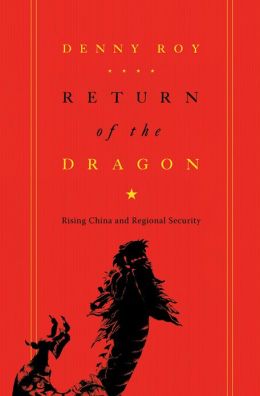
Denny Roy's "Return of the Dragon"

Denny Roy is a senior fellow at the East-West Center in Honolulu and earned his Ph.D. in political science at the University of Chicago. His books include The Pacific War and Its Political Legacies and Taiwan: A Political History.

Roy applied the “Page 99 Test” to his new book, Return of the Dragon: Rising China and Regional Security, and reported the following:
On page 99 of my book we learn that the government of Japan in recent years has taken specific actions that manifest Japan’s fear that a burgeoning China is in some ways a potential threat to Japan’s security. These actions include participating in a US-led program to build a system to shoot down ballistic missiles (a system that China opposes), increased military cooperation between Japan and other countries in the region that are worried about China, and strengthening Japan’s military forces despite the tight restrictions imposed on Japan after its defeat in World War II. This is a microcosm of one of the main themes of the book, which is to describe how the “rise” of China creates or worsens security tensions with countries in the Asia-Pacific region, especially those countries with a recent history of poor relations with the PRC. The “rise” refers to China’s rapid increase in economic, political and military capability relative to its neighbors. The increase in capabilities alone is cause for worry. The international system is a rough neighborhood that ultimately rests on the law of the jungle. States tend to see each other as potential adversaries and to keep track of how much harm others could do to them in the event of a conflict. Relatively strong states, such as China is becoming, usually try to gain more control over their external environment to make themselves safer and more prosperous. These efforts inevitably encroach on the interests of other states. Worries about a rising state are more intense if that state’s government appears assertive or aggressive in its foreign policy. The China-Japan relationship portends long-term strains. Like other states in the region, Japan faces the difficult choice of accommodating a more demanding China—and giving up some of what Japan values in the process—or accepting the high costs and risks of resisting these Chinese demands. The mini-crisis over ownership of the Senkaku/Diaoyutai Islands is an early round of what one Japanese commentator calls “a long struggle with bitter resolve.”
Learn more about Return of the Dragon at the Columbia University Press website.

--Marshal Zeringue

Sunday, June 30, 2013

Andrew C. Isenberg's "Wyatt Earp: A Vigilante Life"

Andrew C. Isenberg is the author of Mining California: An Ecological History and The Destruction of the Bison: An Environmental History, 1750–1920 and the editor of The Nature of Cities: Culture, Landscape, and Urban Space. He is a historian at Temple University and lives in Penn Valley, PA.

Isenberg applied the “Page 99 Test” to his new book, Wyatt Earp: A Vigilante Life, and reported the following:
Page 99 of Wyatt Earp: A Vigilante Life describes faro, the most popular card game in the nineteenth-century West. The book devotes attention to the game because Earp was an accomplished gambler who made his living primarily as a faro dealer. To understand Earp, one must understand the culture of faro in the nineteenth-century West.

The rules of faro are simple: players bet on one or more of the thirteen face cards in a standard deck, and the dealer turns over pairs or cards: “winners” which pay players who have bet on that card, and “losers” which pay the dealer if a player has bet on that card. At the end of play, when there are three cards left in the deck--note the resemblance to three-card monte--the players bet on the order in which the three cards will appear.

The odds only barely favor the dealer, which is why a faro dealer was, almost by definition, a card cheat. Faro players understood that dealers were palming cards, and part of the challenge for a player was to outsmart (or out-cheat) the dealer.

Faro offers a window into Wyatt Earp’s personality. A faro dealer cultivated an air of detachment. The poise and coolness that contemporaries saw in Earp was, in many respects, a trait he developed at the gaming tables.

The boundary between faro dealer and confidence man was blurry. Like dealers of three-card-monte, faro dealers often worked with an accomplice posing as a player who would amble up to the table, place a few bets, win easily, and draw real players to the table. In the 1870s and 1880s, Earp, working with accomplices, sold rocks painted yellow as gold. In 1896, he was involved in fixing a heavyweight championship prizefight in San Francisco. Earp never reformed: in 1911, he was arrested by the Los Angeles police bunco squad for running a crooked faro game.

The law-breaking for which Earp is best known was his so-called “vigilante ride” in 1882, in which he killed some of the men he held responsible for the murder of his brother, Morgan. Earp justified the killings by claiming that the murderers would never have been brought to justice in Arizona’s corrupt courtrooms--a claim that is hard to dispute. But the vigilante killings were also the acts of a gambler and con man accustomed to living by his own rules.
Learn more about Wyatt Earp at the Hill and Wang website.

--Marshal Zeringue

Saturday, June 29, 2013

Barbara Sahakian & Jamie Nicole LaBuzetta's "Bad Moves"

Barbara J. Sahakian is a world-renowned researcher in the fields of neurology and psychiatry, and is currently based at University of Cambridge School of Clinical Medicine in the Department of Clinical Neuropsychology. She is co-inventor of the CANTAB computerised neuropsychological tests, which are in use world-wide. She is probably best known for her research work on cognition and depression, cognitive enhancement using pharmacological treatments, neuroethics and early detection of Alzheimer's disease.

Jamie Nicole LaBuzetta received her medical degree from UCSD, and is currently in the midst of her residency training at the Harvard-affiliated hospitals in Boston, USA. She is a neurology resident at the Partners program (Massachusetts General and Brigham and Women's, two of the Harvard-affiliated hospitals). Her current academic interests are in neurocritical care and neuroethics, and she was recently co-author of an article discussing ethical issues involved in consenting vulnerable patients for neuroscientific research.

Sahakian applied the “Page 99 Test” to their new book, Bad Moves: How decision making goes wrong, and the ethics of smart drugs, and reported the following:
Page 99 of Bad Moves finds us in the midst of discussing the benefits of using modafinil in healthy individuals. This captures a key issue in this book – should such ‘smart drugs’ be used by individuals who do not have neuropsychiatric disorders or brain injury? Modafinil is a ‘wakefulness-promoting agent’ for the treatment of “fatigue associated with narcolepsy, sleep apnoea, and shift-work sleep disorder”. Unlike traditional stimulants (e.g. methylphenidate or Ritalin), modafinil does not have demonstrable abuse potential which opens up the possibility of its widespread use by healthy individuals. The risk-benefit considerations may seem favourable for healthy individuals, although as yet no long term studies on the use of modafinil in healthy people have been conducted. On page 99, we see that modafinil improves decision-making and task enjoyment in healthy individuals as well as memory and attention in younger volunteers and spatial manipulation and mental flexibility in older volunteers. However, to fully understand the implications of having such ‘smart drugs’, we need to place it within the general framework of decision-making, which brings us back to the first few chapters. Decision-making can be purely rational, or ‘cold’, for example when choosing what ingredients to buy for supper. There are also ‘hot’ decisions that “have an emotional component or may involve weighing rewards and punishments”, for example when deciding whether to continue seeing your current partner or accept a date with another person. These “pathways interact in ways that allow our rational selves to be influenced by our emotions and vice versa. This critical interaction is necessary for normal life.” In pathological conditions, however, the balance is disrupted resulting in poor decision-making which can cause detrimental effects on daily living and important life choices. For example, in bipolar disorder, patients in the manic phase experience extreme and persistent euphoria which may lead to risky and bizarre behaviour such as, in one case, investing all their life savings on aquatic equipment intended to keep fish alive forever. So, are there drugs which can improve decision-making and cognition in neuropsychiatric disorders? Yes, there are and modafinil is one of them; for example, modafinil helps people with ADHD improve their performance on ‘cold’ decision-making tasks and enhances their ability to inhibit impulsive, unwanted behaviour. Back on page 99, we also explore the idea that the cognitive enhancing effects of modafinil might “have something to do with its primary function as a treatment for sleep disorders. Sleep is, after all, probably the most dramatic cognitive enhancer we know of.” But in cases where sleeping is a luxury and mental alertness is crucial, such as in sleep-deprived doctors or the military, modafinil and other ‘smart drugs’ might help to improve performance and reduce fatal errors. But why stop there? Perhaps drugs like modafinil can be used to improve cognition and performance in the general population as well, including the elderly. However, we need to stop and consider what the consequences will be if these drugs are readily available. Is it unfair, will people be coerced into using these drugs, and will we become a 24/7 society? These are crucial neuroethical issues that need to be discussed and we “require a well-informed and engaged public to participate in and shape the debate”.
Learn more about Bad Moves at the Oxford University Press website.

--Marshal Zeringue

Friday, June 28, 2013

Mark P. Witton's "Pterosaurs: Natural History, Evolution, Anatomy"

Mark P. Witton is a paleontologist in the School of Earth and Environmental Sciences at the University of Portsmouth. He has served as a technical consultant for Walking with Dinosaurs 3D and many other film and television productions. His illustrations of pterosaurs, dinosaurs, and other prehistoric creatures have appeared in numerous publications, including Science and newspapers around the world.

He applied the “Page 99 Test” to his new book, Pterosaurs: Natural History, Evolution, Anatomy, and reported the following:
From page 99:
So far as can be seen, the first pterosaurs share a suite of features that are documented, along with the rest of their anatomy, by Owen (1870), Wild (1978, 1984b), Padian (1983b), Unwin (1988b), and Dalla Vecchia (1998). They are generally small, with wingspans of 0.5 m in Preondactylus, 0.6 m in Peteinosaurus, and 1.3 m Dimorphodon. They do not have the outlandish proportions seen in other pterosaurs with heads, necks, and forelimbs that are large, but not so much to make their bodies and legs look tiny. Their skulls are rather deep and perforated with large fenestrae so that, despite their size (the skull of Dimorphodon is about 20 cm long), they were probably quite lightweight. The only known skull of Preondactylus is somewhat crushed and its exact shape cannot be determined, but it is often reconstructed with a rather shallow snout (e.g., Wellnhofer 1991a; Dalla Vecchia 1998). This may not be accurate however, as the length of the bony strut between its antorbital fenestra and nasal opening dictates that it must have had a deeper snout than is typically reconstructed (Fig. 10.3; Unwin 2003). The skulls of these pterosaurs are generally unornamented, but Dimorphodon does bear a slight keel along the front part of its lower jaw. Dimorphodon also possesses an external mandibular fenestra, an archosauriform trait retained from pterosaur ancestry that was lost in later pterosaurs (Nesbitt and Hone 2010). Sadly, the remains of other early pterosaurs are too poorly preserved determine if they bore the same feature.
OK, page 99 is a bad place to walk in. That text looks quite horrid in places, with nasty Latin words and lots of dry anatomical description. It’s not all like this. Honest.

Pterosaurs: Natural History, Evolution, Anatomy is a popular science book dedicated to pterosaurs, the extinct flying reptiles that shared the world with dinosaurs millions of years ago. Pterosaurs are awesome creatures. They were the first backboned animals to develop powered flight, comprise at least 130 funky looking species and, towards the end of their 160 million year evolutionary history, attained the proportions of giraffes while still being able to fly.

With accolades like that, it’s hard to write about pterosaurs in dry terms for long. Page 99 describes the anatomy of some of the oldest and most ‘primitive’ pterosaurs currently known, alongside a skeletal diagram and life restoration of one early species, Dimorphodon macronyx. The descriptive text here serves as a primer so we can discuss the locomotion, lifestyles and evolutionary significance of these animals in greater depth elsewhere, discussions of which comprise the majority of the text. Those ferocious-looking words won’t be a problem for readers this far in, either, as the language in Pterosaurs is as straightforward as possible with jargon minimised, but clearly explained when unavoidable. Pterosaurs was penned with enthusiasts of natural history and palaeontology in mind, not academics.

Pterosaurs does a lot more than just looking at specific pterosaur species however. All aspects of pterosaur palaeontology are touched on with introductory chapters covering pterosaur discovery and biology, their evolutionary origins, general anatomy, how they walked and flew, and the basics of their reproduction, growth and habits. Section two, including page 99, breaks pterosaurs up into 16 distinct groups and discusses the history of discovery, anatomy and lifestyles of each lineage. The final section looks at why pterosaurs met their demise 65 million years ago. The text is complemented with over 200 images of pterosaur fossils, numerous original paintings of pterosaurs in life and diagrams of their fossils and anatomy.

Over 500 pterosaur research papers are cited in the text and listed for extensive follow-up reading should readers want to take their knowledge further. My hope is that a number of readers will do just that because, if I’ve done my job right, this book will make pterosaurs as interesting for them as they are for me.
Learn more about the book and author at Mark P. Witton's website, blog, and Twitter perch.

--Marshal Zeringue